High-Performance Spaces in Mountain Homes that Matter Most
Jennifer Hoey of Suede Studio shares how intentional design in the mudroom, ski locker and bunk room determines whether a mountain home delivers daily.

Photo: Gibeon
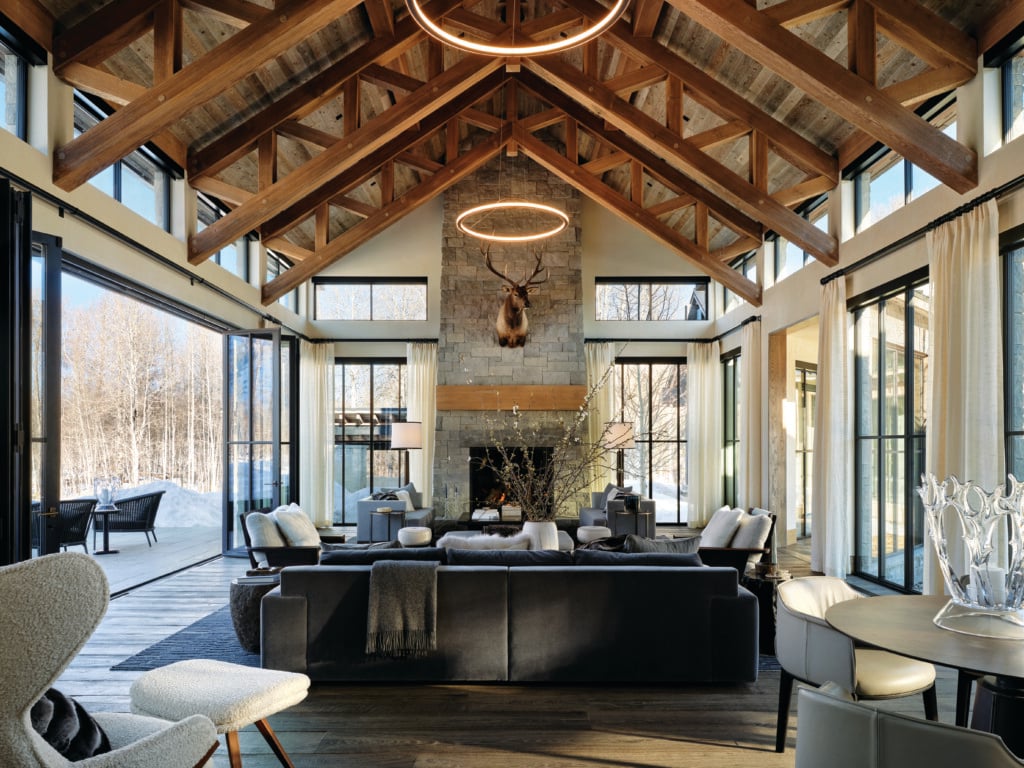
A mountain residence operates on a fundamentally different cadence than a primary home. The season is compressed, the usage is intense and the margin for inefficiency is minimal. Performance is tested immediately—often by the second powder day—when the difference between a home that functions and one that doesn’t become unmistakably clear.
The Significance of Secondary Spaces
The great room performs as expected—it’s designed to be seen, and succeeds in doing so. But the true measure of a mountain home is not found there. It’s found in the secondary spaces—the mudroom, the ski locker and the bunk rooms. These are the rooms that determine whether a home supports the rhythm of mountain life or subtly works against it. Over time, they define whether a family returns season after season feeling aligned with their home.
The Mudroom

Photo: Gabe Border
The mudroom is the operational core. It is used by everyone, multiple times a day, year-round and must handle constant transition without friction. Designed with precision, full-height cabinetry creates order and individual zones; large-format stone flooring adds durability as much as aesthetic; strategically placed storage and hooks are based on how people actually enter and move and integrated charging stations keep devices off the counter and out of the way. The goal is a space that absorbs daily use seamlessly, without visual or functional breakdown.

Photo: Gabe Border
The Locker Room
Photo: Gibeon
The ski locker is a logistics problem that requires a technical solution. In a home that sleeps twelve, a single powder day produces a significant volume of wet boots, gloves and layers. The best approach to these spaces is systems thinking—individual compartments for clarity, integrated boot dryers concealed within cabinetry, ventilated inserts for airflow and durable flooring designed for safety and longevity. Even the bench height is calibrated for the physical act of gearing up. It’s the sum of those decisions, not any single one, that determines whether the room actually performs.

Photo: Zakara Photography
The Bunk Room

Photo: Gibeon
The bunk room serves a different purpose. A well-designed mountain home is not just about this season, it also takes into account the next twenty. In a multigenerational home, this is where the next generation forms its attachment to the property. The difference lives in the details: individual reading lights, generous storage to manage the inherent chaos and materials that give the room a clear point of view rather than treating it as an afterthought. These spaces should be designed with the same level of intention as a primary suite because the long-term return, measured in decades of family use, justifies it.

Photo: Gibeon
In high-end mountain homes, luxury is not defined by excess. It is defined by resolution—the elimination of friction. These homes must perform under pressure, support daily life effortlessly and maintain that performance over time. Their success isn’t measured at completion, but years later, in whether they continue to function and draw people back.

Photo: Gabe Border
Jennifer Hoey is the founder and principal designer of Suede Studio, a luxury interior design firm with studios in Ketchum, Idaho and Bozeman, Montana. An NCIDQ-certified designer and Mountain Living Top Designer from 2019–2026, Hoey has spent more than two decades designing private residences across the Mountain West. View their profile or contact them at 208-726-1561.
Sponsored content for this article provided by Suede Studio.