Lighting the Vertical Space: Selecting Chandeliers for Vaulted Great Rooms
Finding the right chandelier to enhance a mountain home.

Photo: Courtesy of The Peak Antler Company
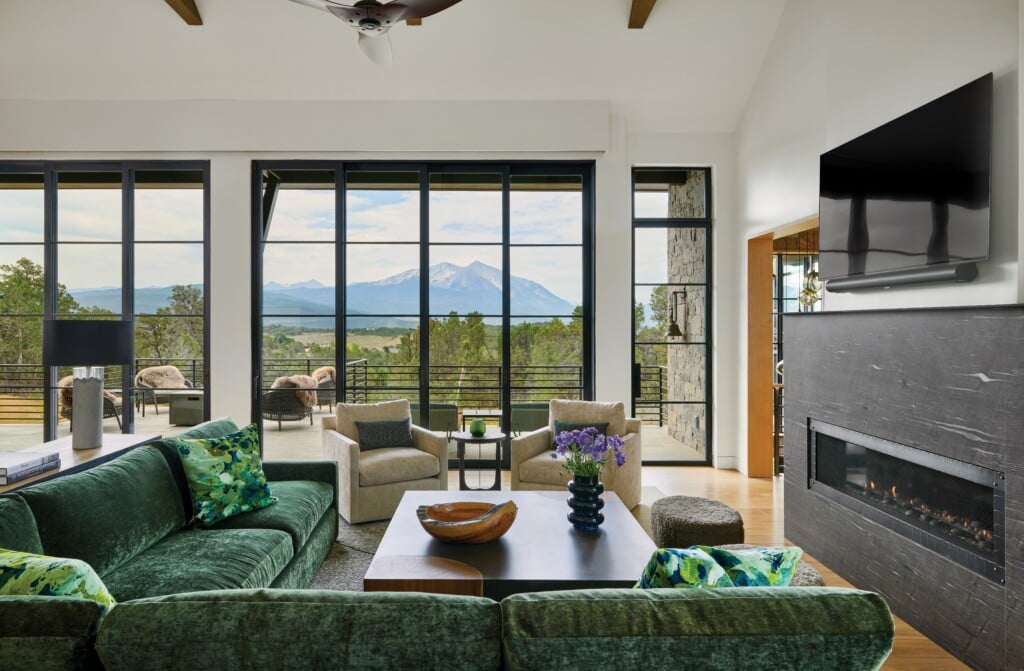
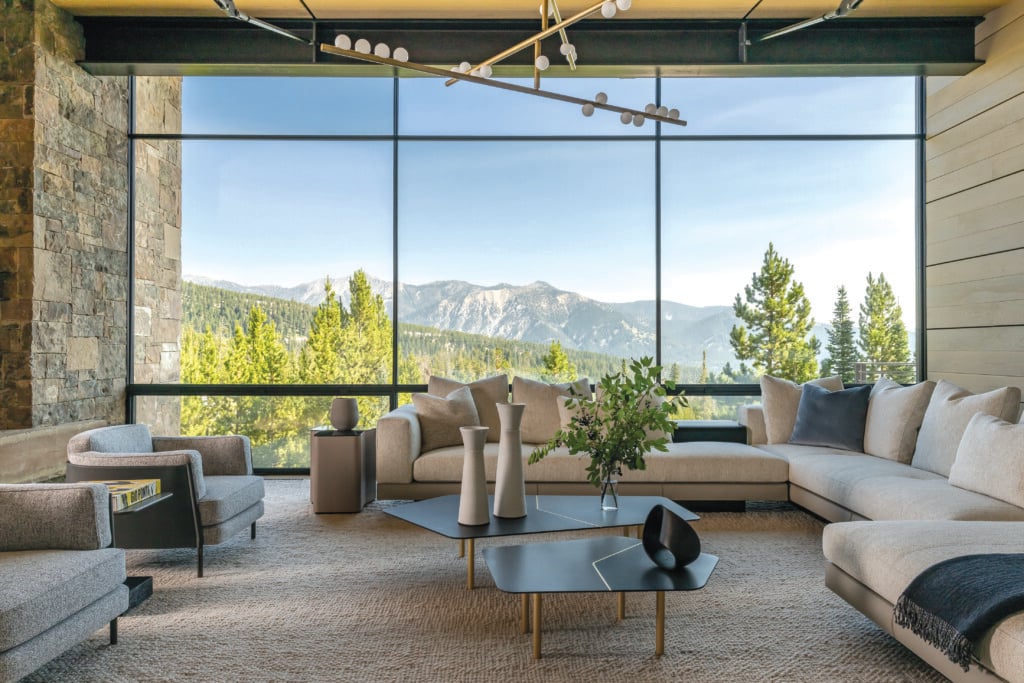
Vaulted great rooms are a defining feature of mountain homes. Exposed beams, expansive windows and ceiling heights that often exceed twenty feet create a strong architectural presence. Chandeliers need to be scaled and positioned to hold their place within the volume of the room. Otherwise, they disappear instead of anchoring the space.
Getting the Scale Right
In vaulted rooms, scale is determined by proportion, not just size. In rooms with large fireplaces, beams and expansive windows, the fixture has to compete with the architecture.

Photo: Courtesy of The Peak Antler Company
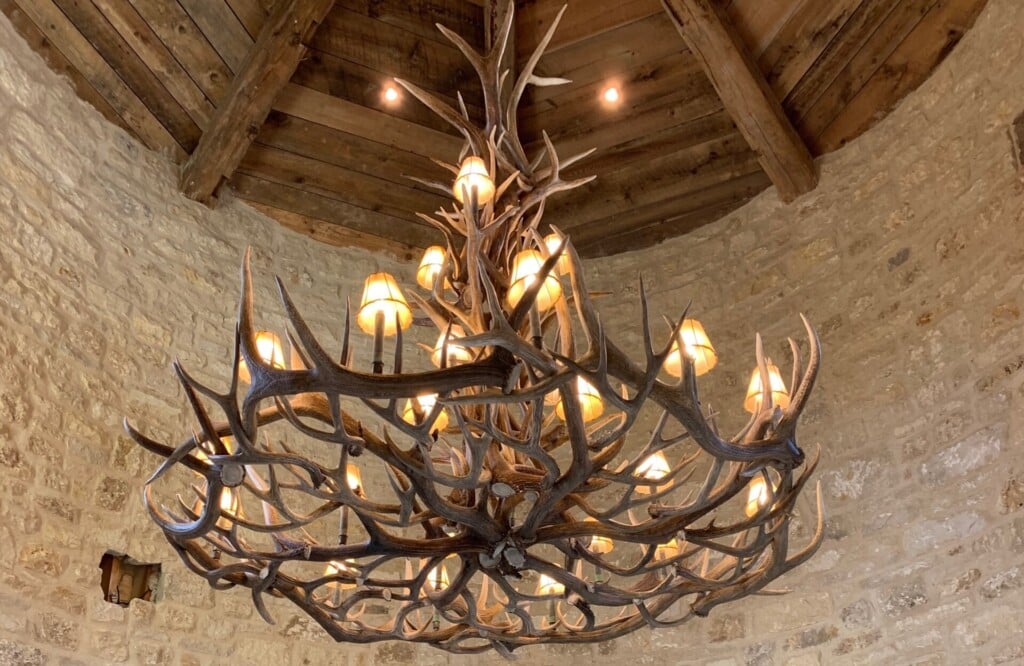
This is why larger fixtures are often recommended, sometimes beyond what initially feels comfortable. In taller spaces, multi-tier or more dimensional designs are used to extend the fixture vertically while maintaining enough width to anchor the room below. From the main seating area, you should be able to clearly see the full shape of the chandelier. If it feels small or indistinct, the proportions are not doing enough work.
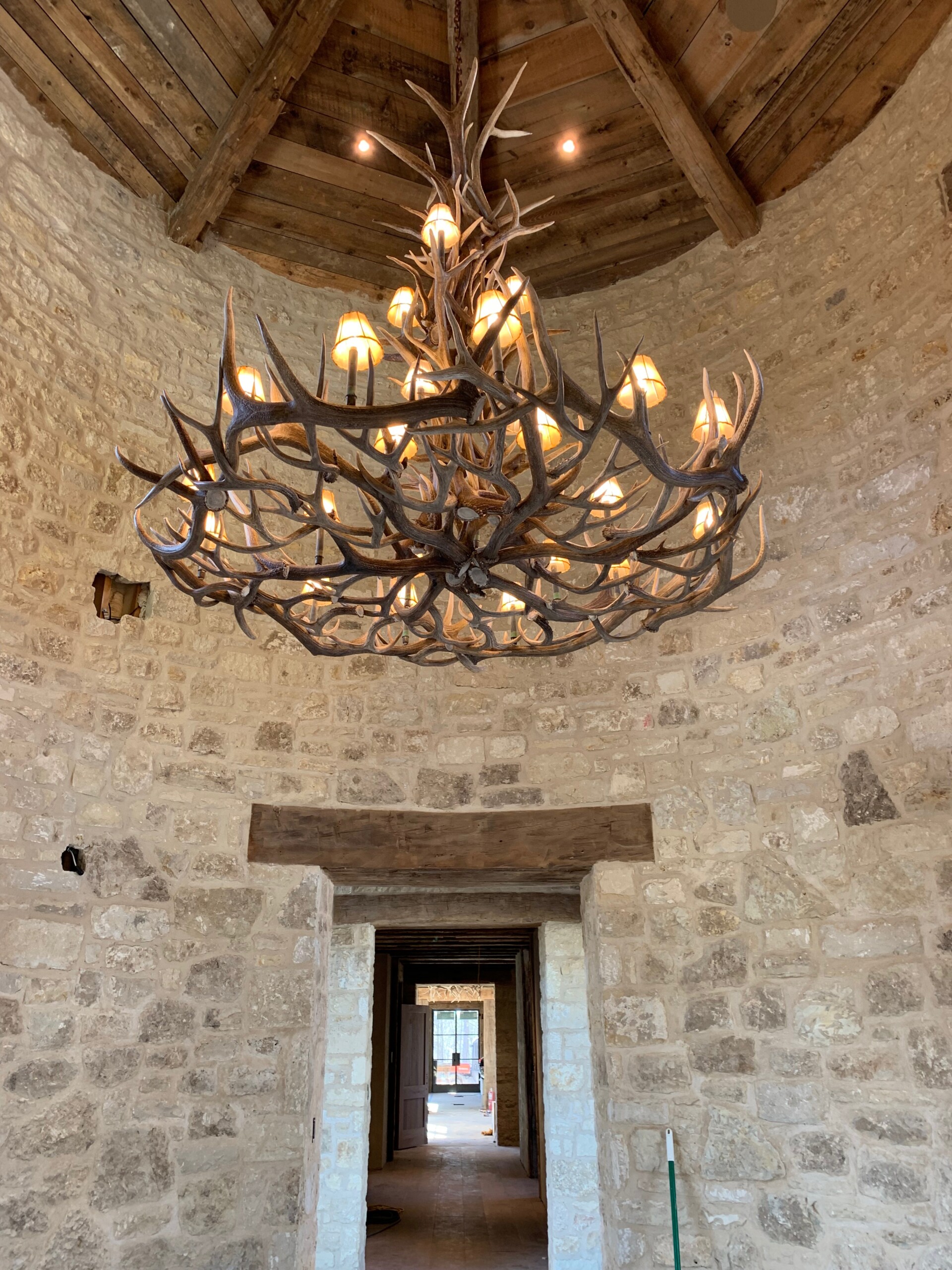
Photo: Courtesy of The Peak Antler Company
Bringing the Fixture Into the Room
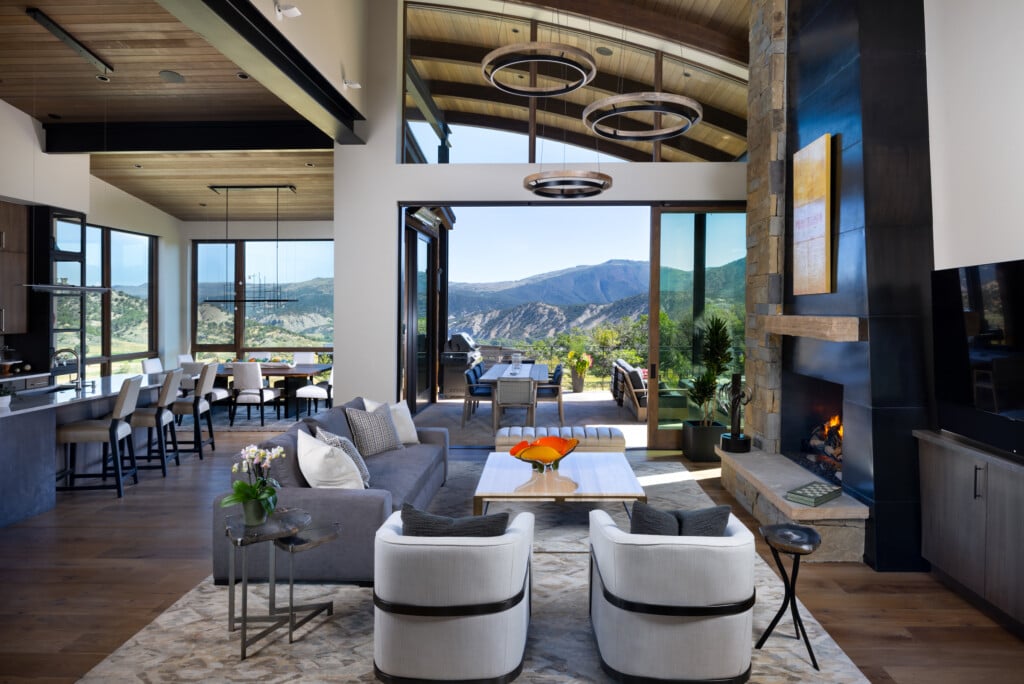
Once the proportions are correct, placement determines whether the chandelier actually engages with the room. In many vaulted spaces, fixtures are hung near the peak to keep them out of the way. In practice, this can leave the chandelier far above the seating area, where it falls outside the natural line of sight and provides limited light.

Photo: Courtesy of The Peak Antler Company
A fixture that is too high becomes part of the ceiling. Too low, and it begins to feel heavy within the space. The right placement sits within the natural line of sight, allowing the chandelier to relate to the seating area without interfering with movement or views.
In some cases, a wider fixture can also help define the space below. Broader chandeliers can create a visual “ceiling” over the seating area, making a tall room feel more grounded and comfortable without lowering the actual structure of the space. In practice, this means positioning the fixture low enough to provide usable light and visual presence, while leaving enough open space above so the ceiling does not feel crowded.

Photo: Courtesy of The Peak Antler Company
Choosing a Form That Holds Up
With scale and placement established, the form of the chandelier determines how it holds its presence. In taller rooms, flatter fixtures often lack enough structure, even when sized correctly. More dimensional designs tend to perform better, whether that is a more intricate piece with movement and layered detail or a simpler, open form with long sweeping lines that carry through the space.

Photo: Courtesy of The Peak Antler Company
Multi-tier or branching designs are especially effective. They extend vertically without becoming narrow and maintain enough spread to anchor the space. The form should read first, before the light itself becomes the focus.
In rooms like this, a chandelier is not competing with the space. It is either holding it together or getting lost in it. When proportion, placement and form are handled correctly, the room stops feeling oversized and starts functioning the way it was intended.
Jeff Musgrave is the founder, owner, and artisan of The Peak Antler Company, a Colorado-based company that’s been creating original custom antler chandeliers, western art, furniture and home accessories for over twenty years. View their profile or contact Jeff at 719-641-8844.
Content for this article provided by The Peak Antler Company.