Designing a Mountain Home that Blends Seamlessly into the Landscape
4 foundational strategies that make an impact.

Photo: Gabe Border
What makes a mountain home feel like it truly belongs to its landscape, and how do you actually achieve it? “It’s not necessarily about designing a home that disappears,” says Aaron Belzer, Director of Design at Farmer Payne Architects. “It’s about designing a home that looks like it belongs to a specific place; a house that feels like it could only exist where it is.”
In practice, it comes down to a series of intentional decisions: how a home meets the land, how it’s shaped by it and how it’s experienced over time. In the Mountain West, where buildable sites are limited and often defined by steep topography and strict hillside ordinances, architecture must respond to the land rather than compete with it.
Start With the Site

Photo: David Agnello
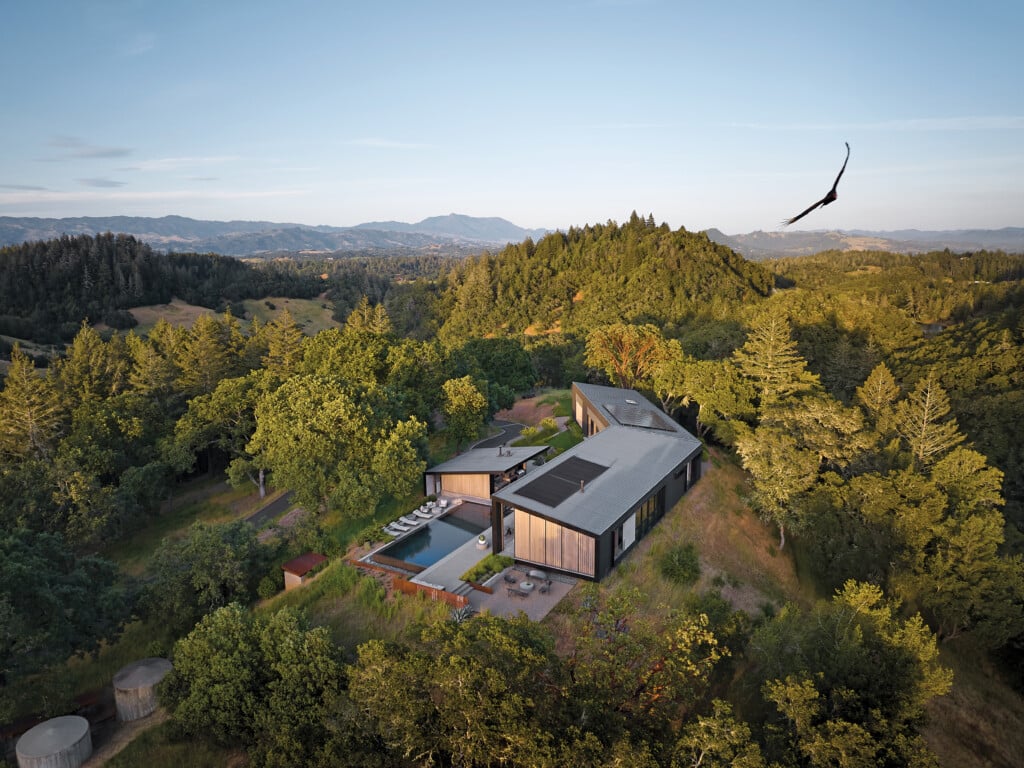
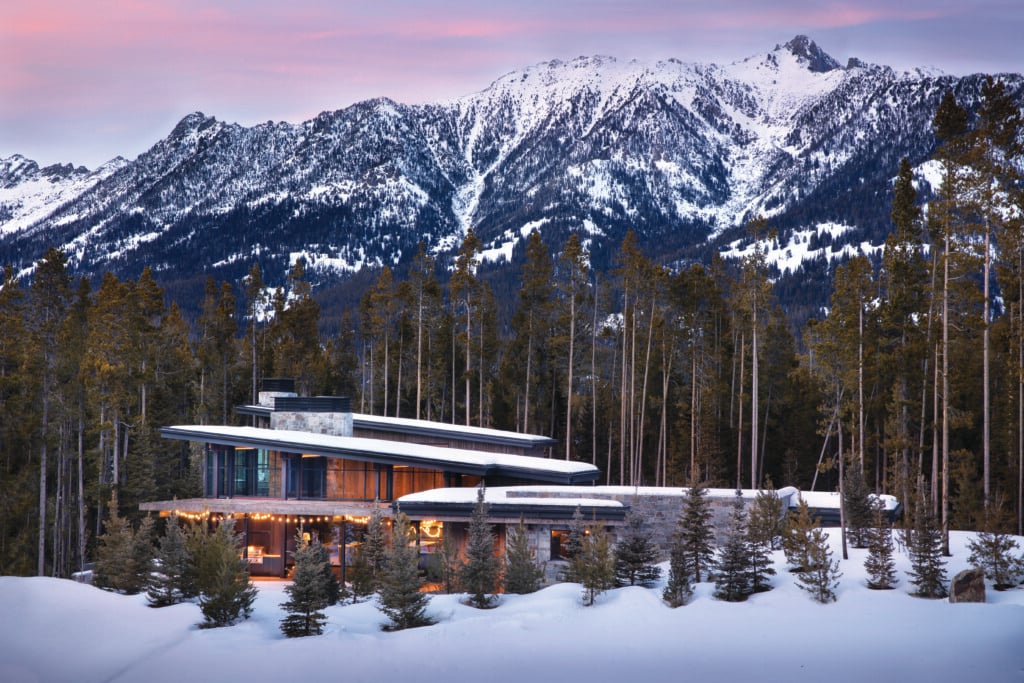
From the beginning of the process, visiting the site and getting a feel for the land will inform the direction of the design, taking into account slopes, sun patterns, views and privacy. In most cases, topography becomes the guiding force in a mountain home, naturally leading homes to be embedded or stepped into the hillside. “If there’s topography, we’re always blending the house into it,” Belzer notes. “Most of the time, anything else feels too dominant.”
Reduce Visual Impact
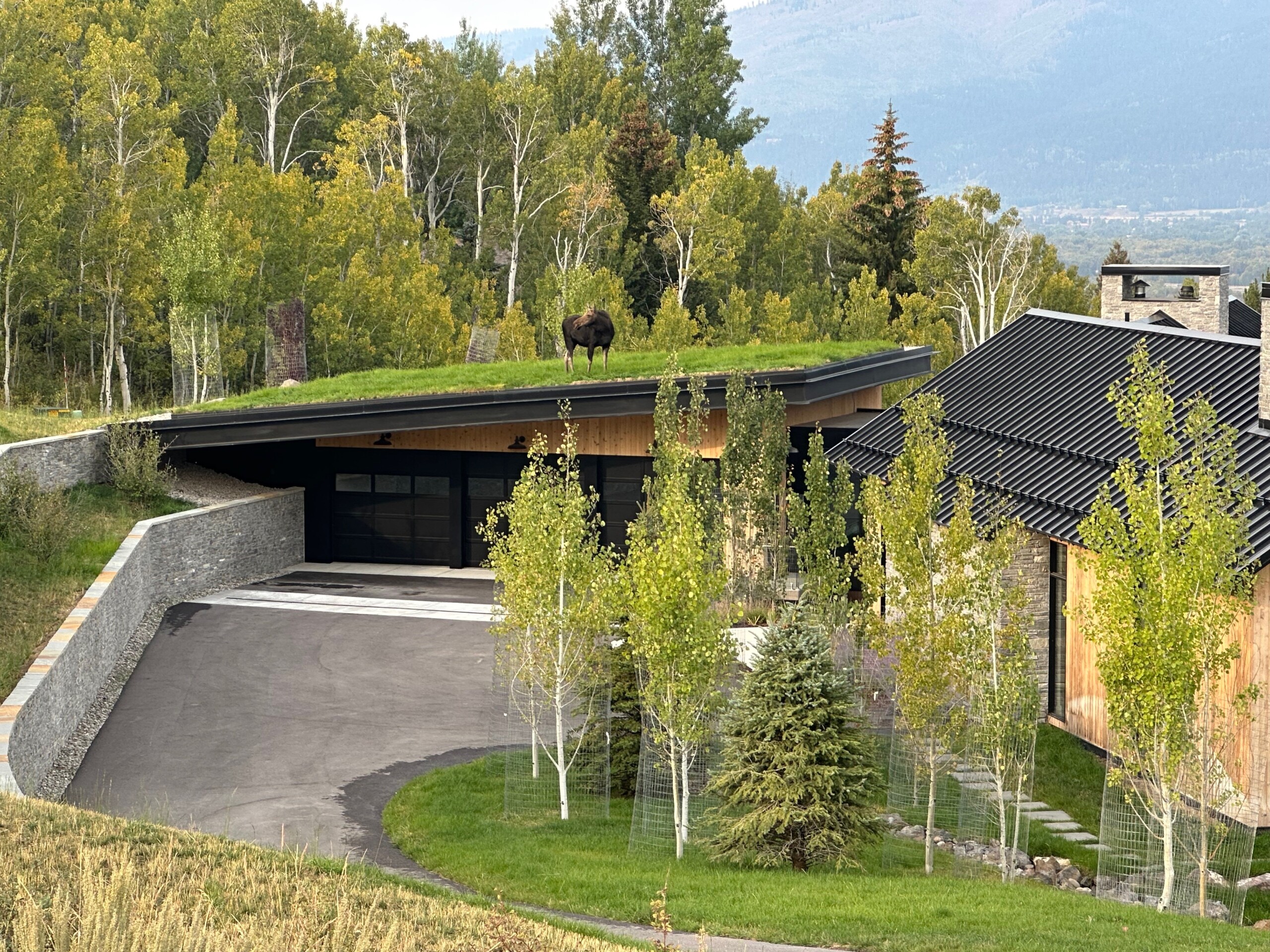
Photo: New West Building Company
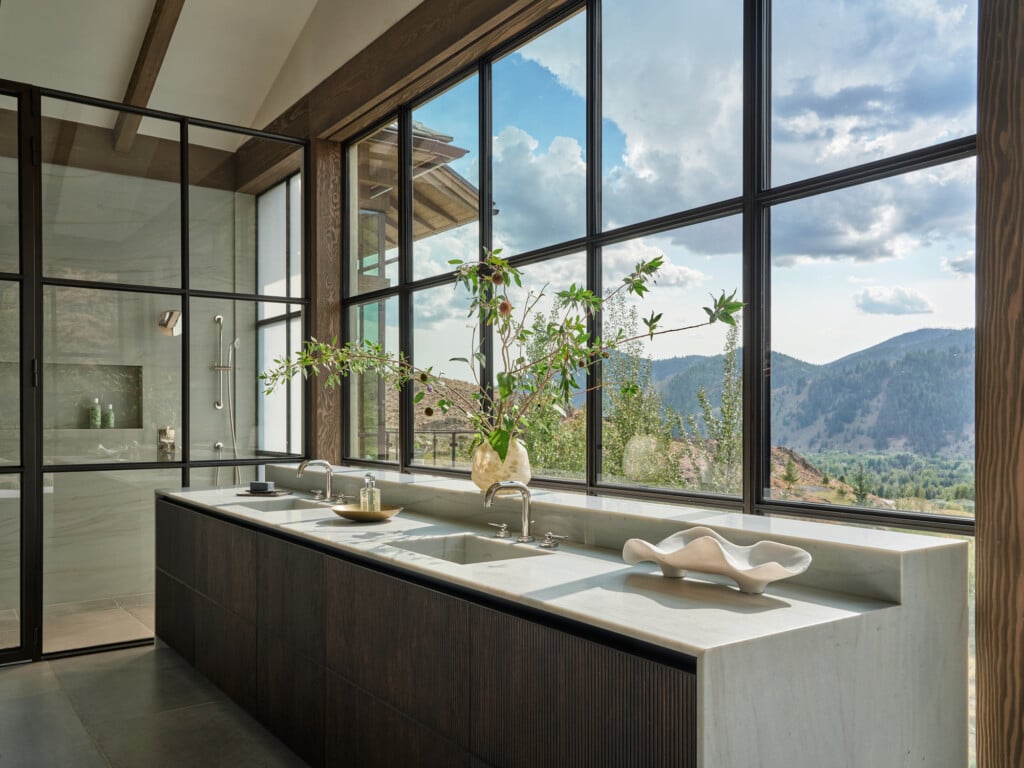
Maximizing views doesn’t always mean exposing everything at once. In fact, a more restrained approach often makes the landscape feel more powerful. By framing views and allowing the home to open up gradually, more enclosed spaces give way to expansive ones and a sense of sequence is created. This allows the surroundings to reveal themselves time after time, making each view feel intentional rather than constant. This careful sequencing also reduces the home’s visual impact from the outside, breaking up massing and minimizing exposed facades so the architecture blends seamlessly into the landscape.
Green roofs can also significantly reduce visual massing, particularly on sloped sites, while improving insulation and supporting the surrounding ecosystem. Though they require close coordination between architects, engineers and consultants, the results are well worth it.
Use Materials That Belong

Photo: Gabe Border
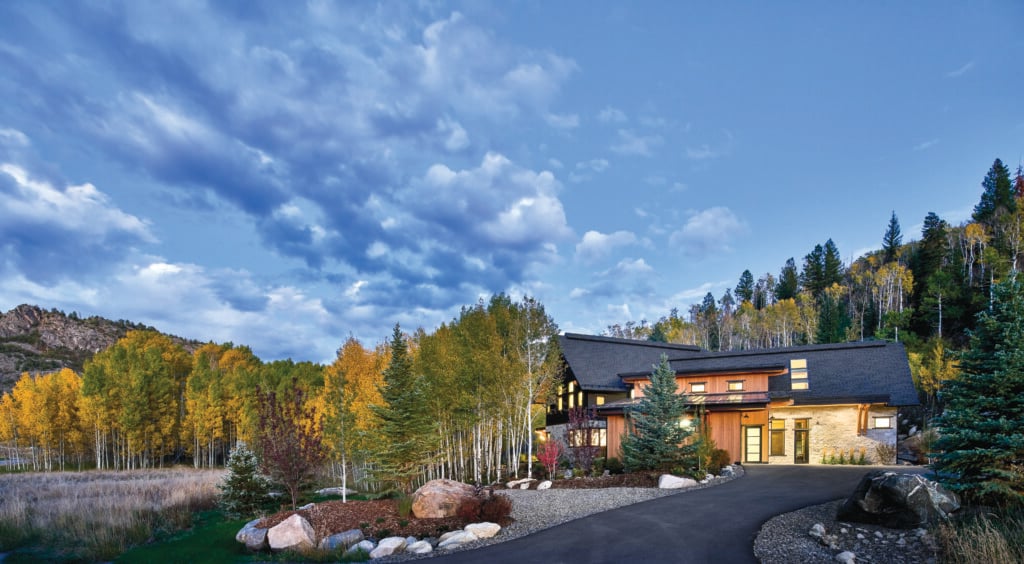
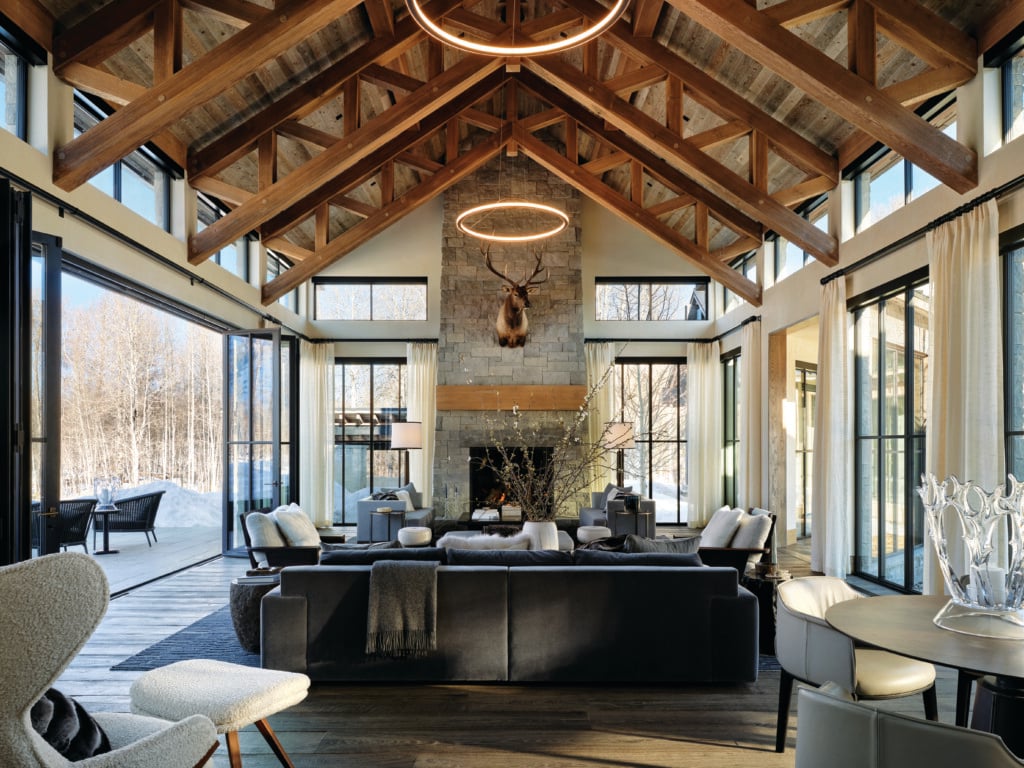
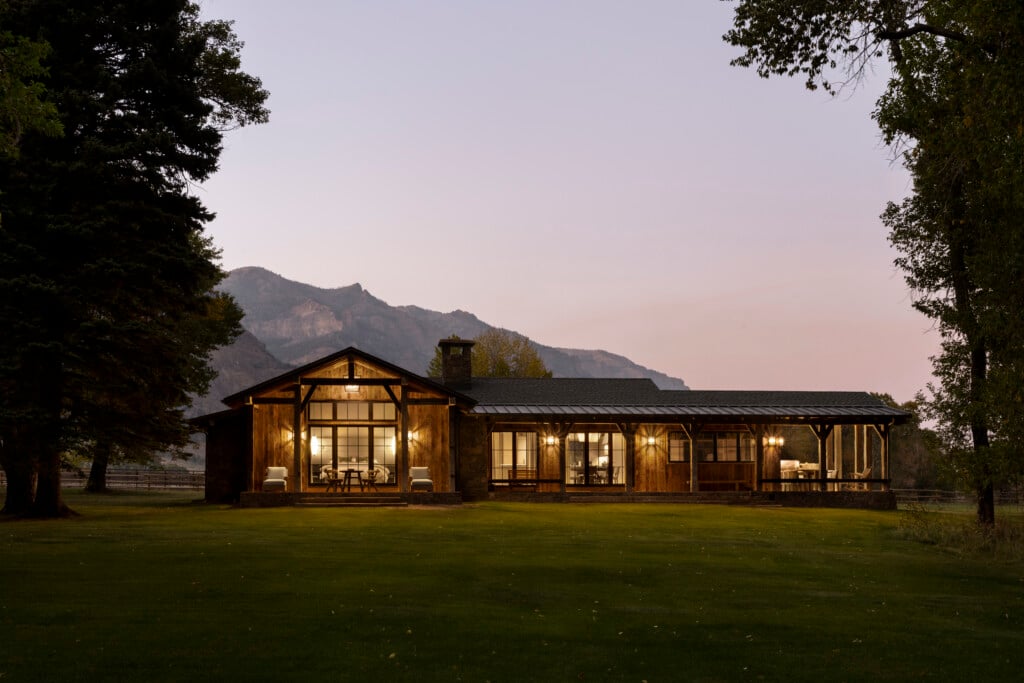
Material selection plays a critical role in helping a home settle into its environment. Natural tones, regional materials and elements that weather over time prevent a home from feeling out of place. “It’s less about disappearing,” Belzer says, “and more about not standing out like a sore thumb.”
Build the Right Team

Photo: Krafty Photos
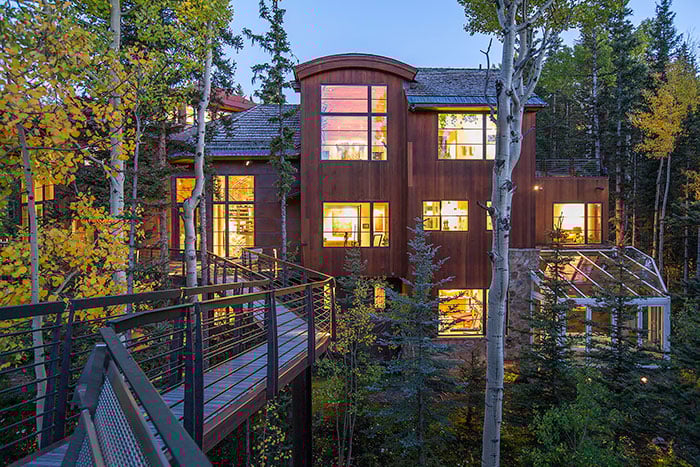
Collaboration with a landscape architect is essential. Native revegetation, grading and planting strategies extend the architecture into the land and allow the landscape design to merge with the architecture, softening transitions and reinforcing a sense of continuity.
Design Moves That Make the Difference

Photo: Gabe Border
In summary, while every project is site-specific, several strategies consistently help a home feel integrated with its surroundings:
- Following the natural contours of the land rather than flattening the site
- Stepping the home into the hillside to reduce perceived scale
- Breaking the mass into smaller volumes instead of a single large form
- Incorporating green roofs to soften rooflines and extend the landscape over the architecture
- Using natural, regional materials that weather and blend over time
- Framing views selectively rather than exposing them all at once

Photo: Gabe Border
Ultimately, if your goal is a home that feels like it “disappears into the landscape,” we recommend focusing on restraint, responding to the site and respecting its unique history, wildlife and culture so the architecture feels inevitable, not imposed.
Katie Watts is Marketing Manager at Farmer Payne Architects, a boutique architecture firm that creates award-winning luxury residential architecture, cutting-edge commercial architecture and offers inspired interior design. View their profile or contact them at 307-264-0080.
Sponsored content provided by Farmer Payne Architects.