Invisible History: The Overlooked Beauty of Barns Through Art
Artist Sandra Pratt celebrates the humble yet heroic barn in a new series of 100 paintings.
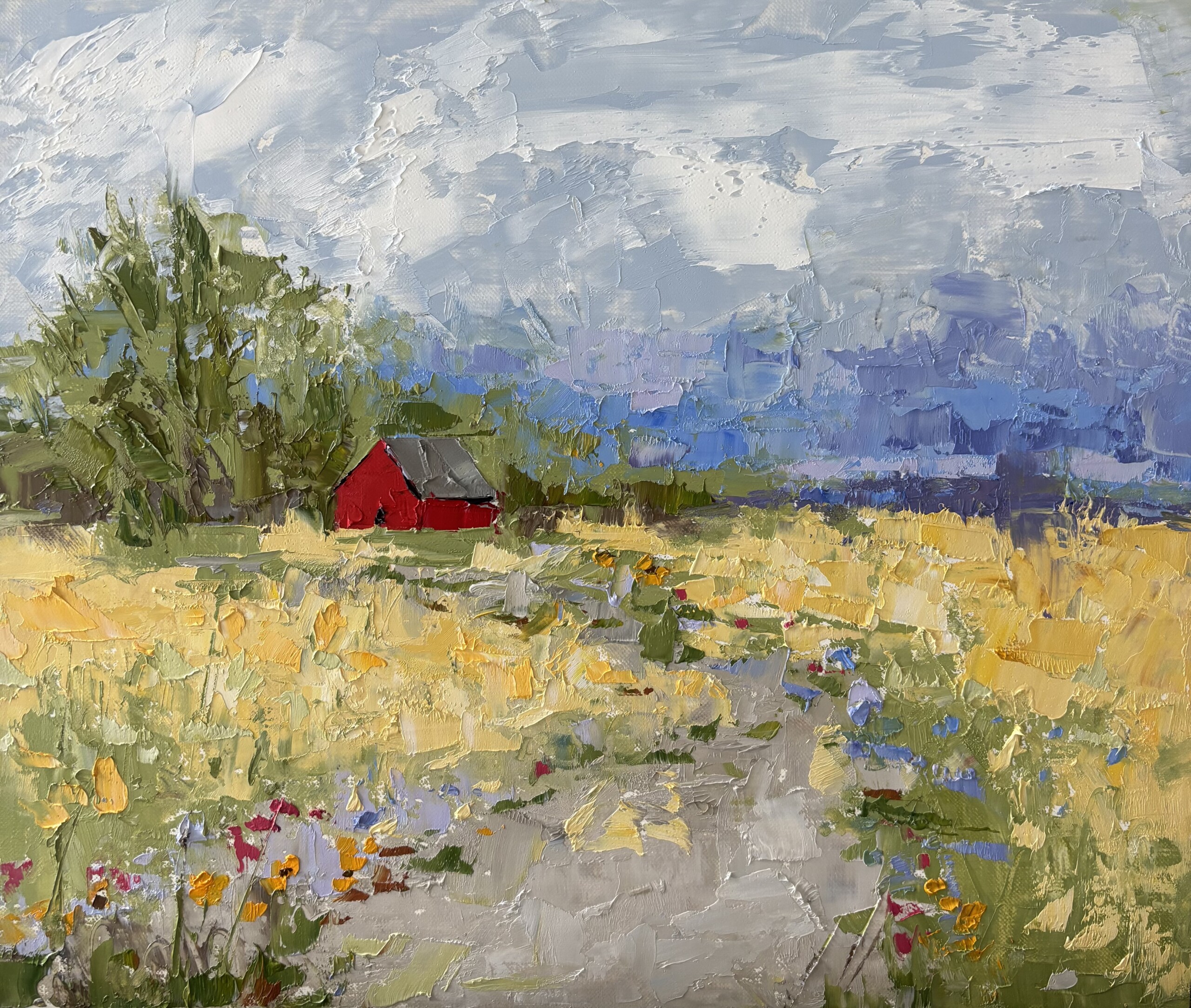
“American Field,” an oil on panel painting from the American Pastoral series by Sandra Pratt. “This is a classic Colorado scene, where everything just works perfectly,” Pratt says. | Photo: Sandra Pratt
Barns were an ordinary and unremarkable part of the rural landscape when artist Sandra Pratt was growing up in the Midwest. “Barns were just part of the view,” she says. It was only after she began painting that Pratt began to understand how deeply those familiar subjects had affected her. “It turns out I was paying attention all along,” she says.
Now, these humble buildings are the inspiration behind “American Pastoral,” Pratt’s ambitious 100-painting series examining and celebrating red barns. The artist appreciates the barn’s lack of pretension. “It wasn’t built to be admired; it was built to work, and somehow that purposefulness is exactly what makes it beautiful,” Pratt says.
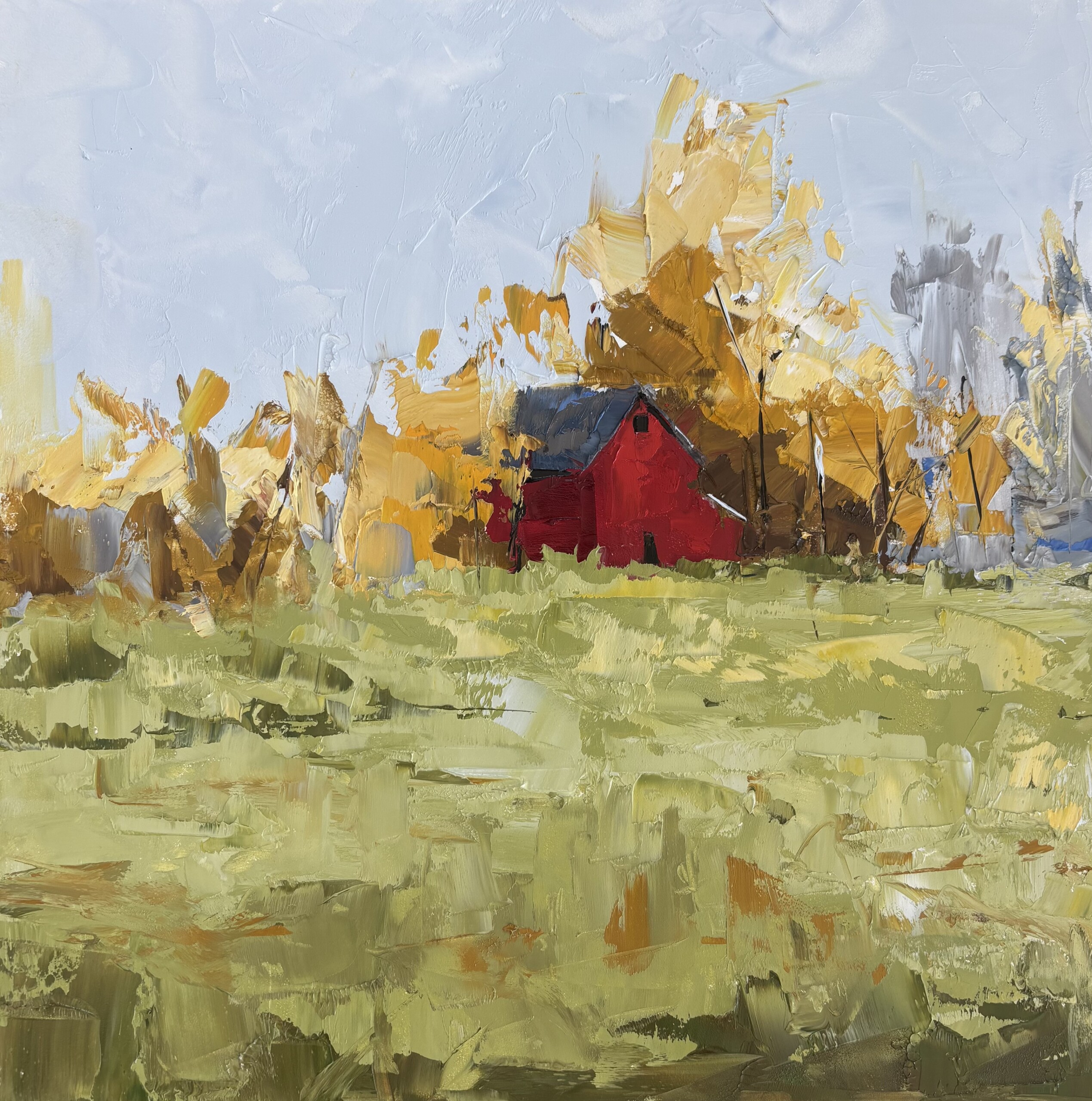
“Some afternoons the trees do all the work for you,” says Pratt about “Crimson Barn No. 1.” “I just had to get the red right before the light moved on without me.”| Photo: Sandra Pratt
She finds herself moved by the endurance of these vintage wooden structures. “Here they are, still standing, often long after the farms themselves have changed hands or disappeared,” she notes.
“You look at one and you feel the generations of use, the weather, the slow work of the land around it; that’s what I’m trying to get into the paintings, not just the structure but all of that intricate, invisible history.”
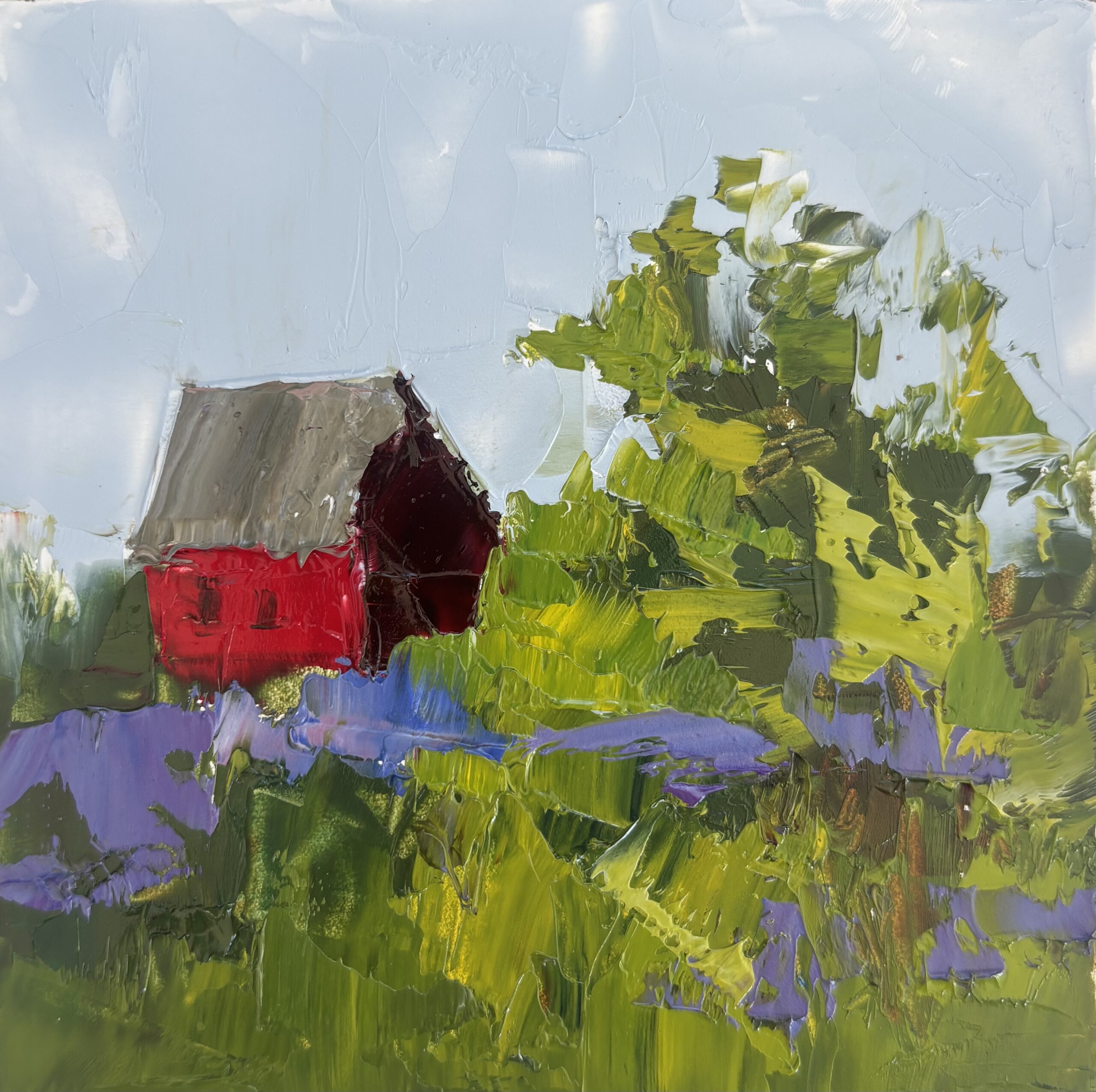
As Pratt explains in working on “What the Meadow Holds, No. 5.,” “Even when the field is in charge, the barn still holds its ground.” | Photo: Sandra Pratt
In this new series, the self-taught painter works exclusively with palette knives, employing a bold alla prima technique. “The entire painting is completed in a single session, wet into wet,” Pratt explains, adding, “There’s no going back.” She finds that constraint to be liberating, forcing her to be decisive.
“The texture you see in my paintings—that dimensional, sculptural quality—comes directly from the way the knife moves paint,” Pratt says. “It’s a complete mind-body experience.” By exploring barns in a series of multiple paintings, she can dive deeper. “Something starts to happen that couldn’t happen in just one,” Pratt says of the process. “You find angles, and light conditions, and emotional registers you never would have found if you’d moved on after the first painting.”
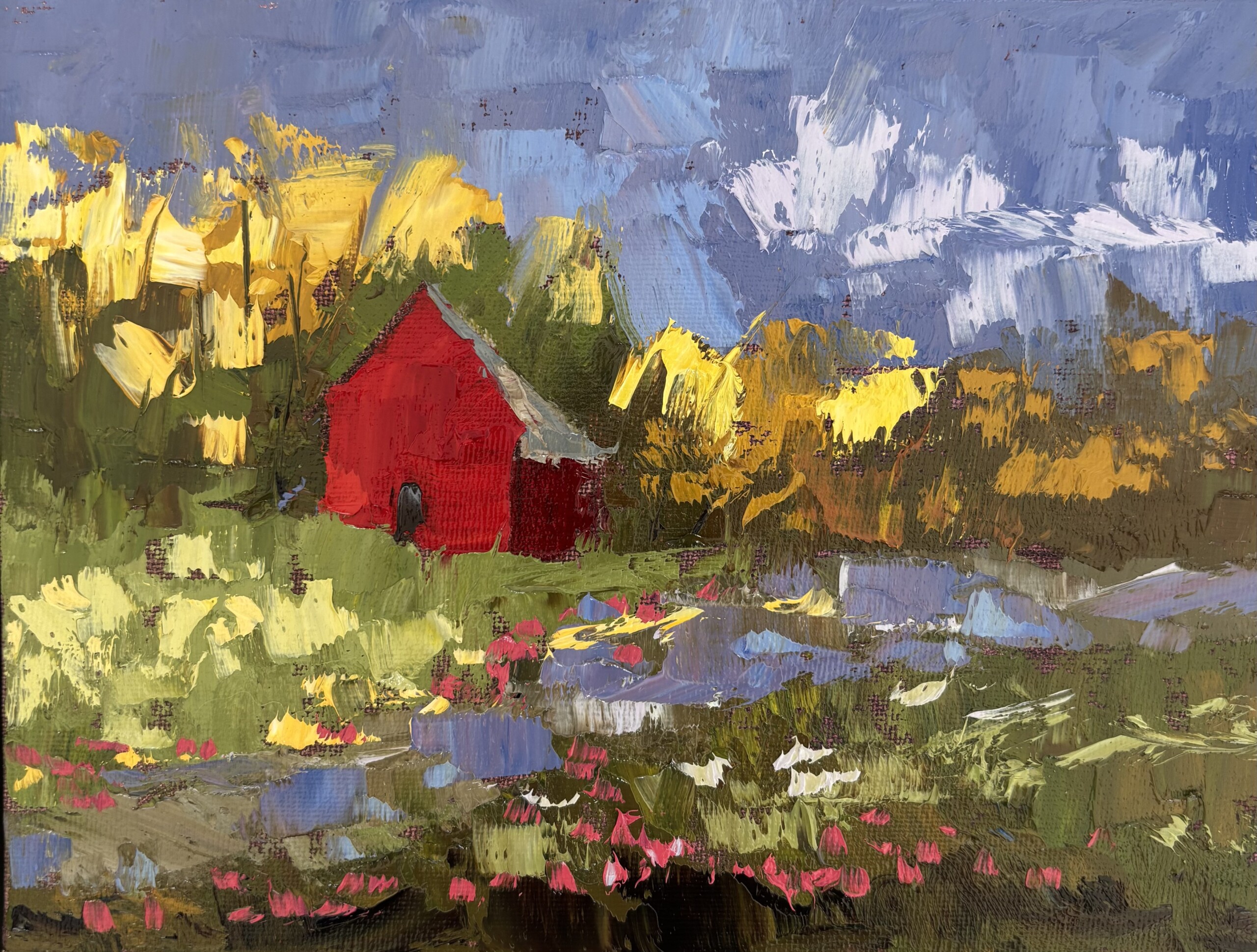
“Where the Light Collects, No. 3,” includes a field of flowers in vivid shades of pink, gold and majestic blue. “There’s a barn back there somewhere, if you look long enough,” says Pratt. | Photo: Sandra Pratt
Pratt roams in constant search of barns that call to her. “The subjects that stop me are the ones where something in the landscape feels charged—where the light is doing something specific to a structure, or the color of a field against a sky is almost too much.”
It’s not postcard perfection that inspires her creative instincts, but rather a special feeling. “I’m looking for the moment when an ordinary thing becomes extraordinary just because of how the light is falling on it,” says Pratt. “There’s something in a red barn against an open sky that feels almost defiant; not dramatic, but resolute,” she says. “That’s the quality I’m chasing in the paint.”
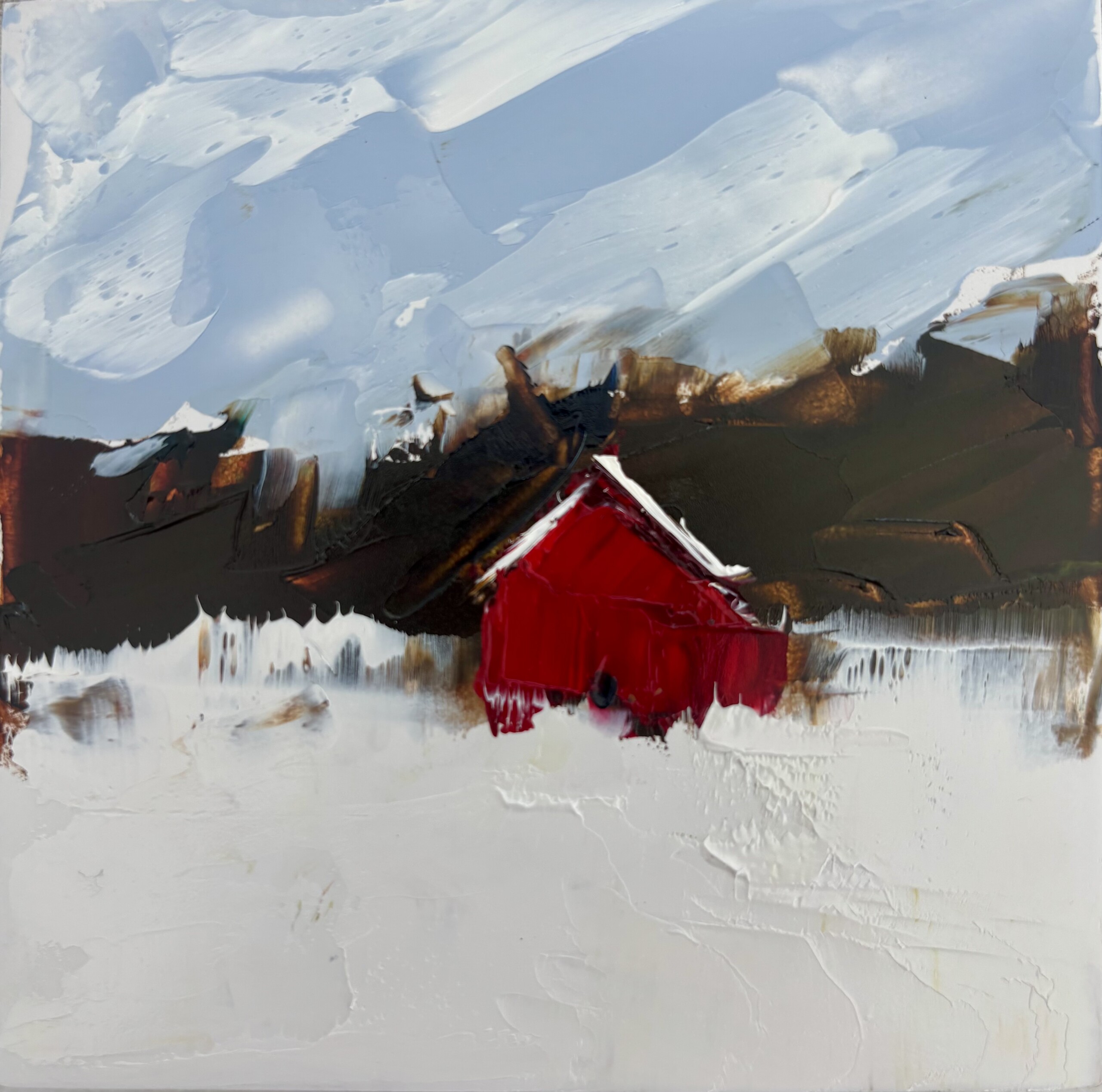
“A red barn in winter is the perfect combination,” says Pratt, of“Snow Keep, No. 2.” “Everything else gave up its color for the winter. This one didn’t.” | Photo: Sandra Pratt
Pratt’s paintings make the case that ordinary things are worth looking at, suggesting that a field, or barn, or country road bathed in late-afternoon light can contain just as much meaning as more conventionally dramatic landscapes.
“I want someone to stand in front of one of my paintings and feel what I felt when I stopped the car,” says Pratt. “That sudden recognition that something beautiful is happening right here, right now, in this unremarkable place. If the painting does that, it’s done its job.”
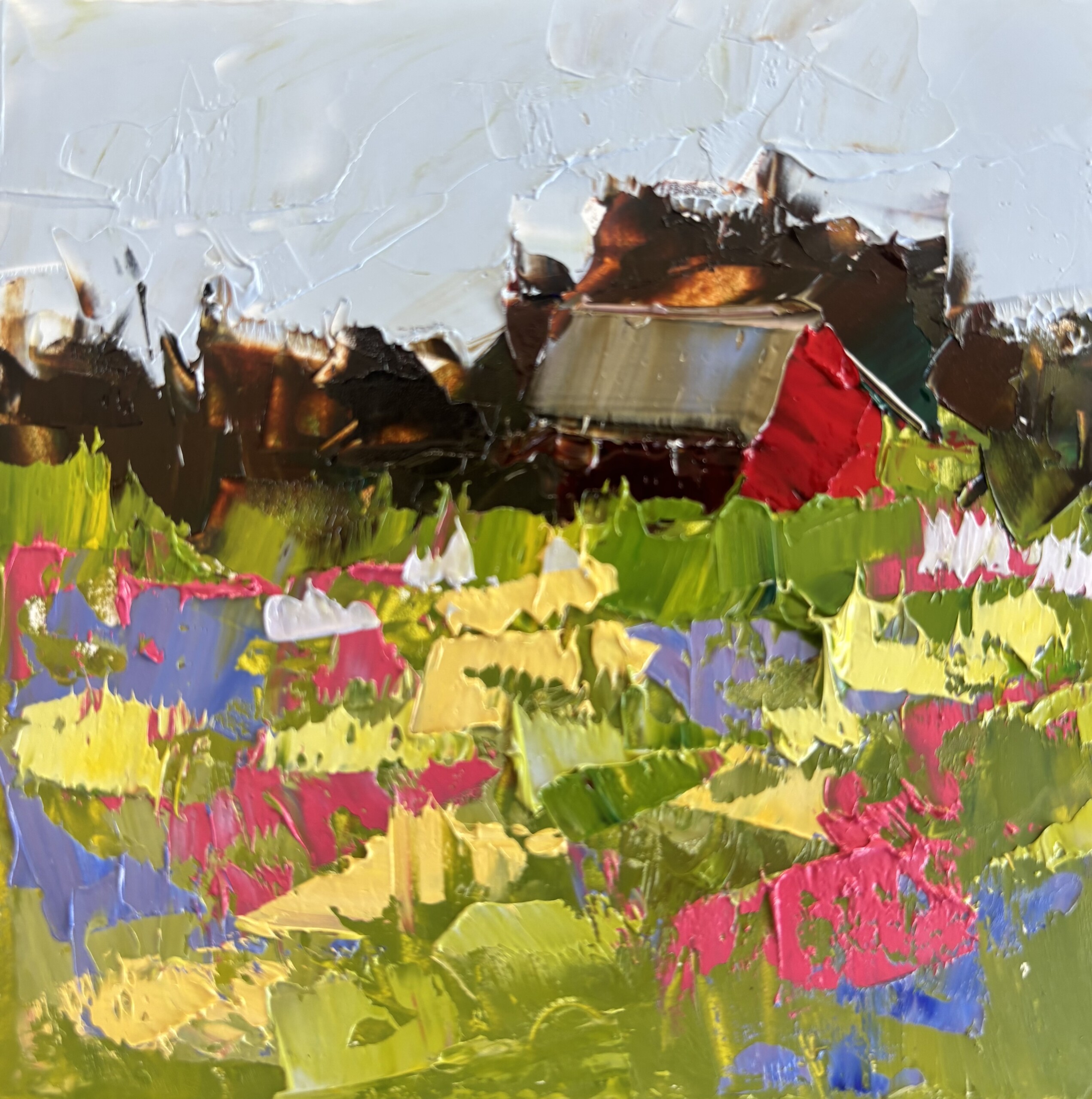
“The lavender does most of the talking here, low and soft, while the barn holds its color in the back like it’s keeping a secret,” says Pratt of “Hidden in Bloom, No. 4.” | Photo: Sandra Pratt

The artist. | Photo: Sandra Pratt