Mountain Homes, Designed with Balance
Layers, textures and unexpected combinations create interiors with depth and personality.

Photo: David O. Marlow
Balance in interior design rarely comes from symmetry alone. Just as important is contrast; hard against soft, refined beside rustic, old layered with new. Thoughtful interplay of elements brings energy, depth and visual interest to a space.
Designers often achieve this equilibrium by blending materials and styles that might initially seem at odds. When done well, the result feels collected rather than curated, revealing designs that are rich in personality yet grounded in harmony.
The Power of Texture

Photo: David O. Marlow
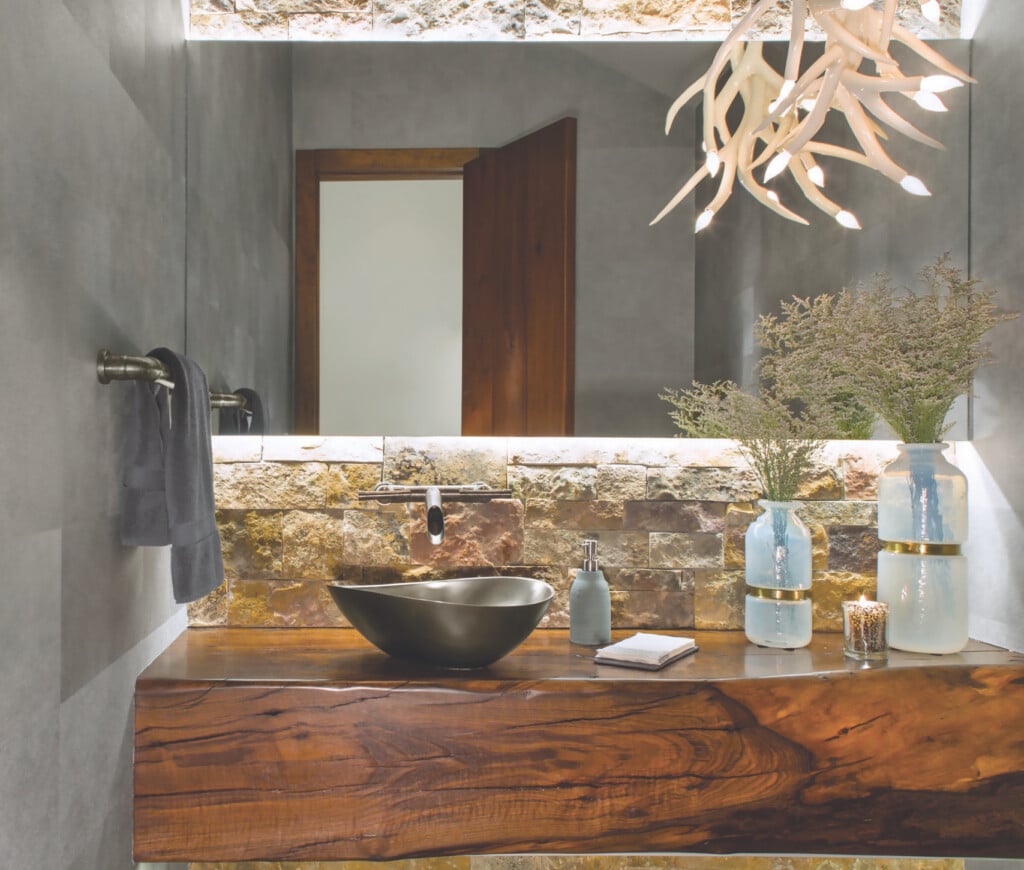
Texture is often the quiet hero of interior design. It brings dimension to a space, even when the overall color palette is subtle. Natural materials are especially effective for creating this layered effect. Wicker and rattan furniture introduce warmth and organic pattern, while steel elements such as metal lighting elements and table bases add structure and edge.
Stone or raw rock surfaces, whether in fireplaces, tabletops or accent pieces, anchor the room with a sense of permanence. Together, these materials create tactile contrast: smooth against rough, warm against cool. The room feels dynamic without relying on bold color or ornate decoration.
Mixing Eras and Silhouettes

Photo: David O. Marlow
Another key to balance lies in mixing design influences. Vintage pieces paired with more modern elements create a connection between past and present. For example, a weathered antique armoire flanked by a sleek metal lamp, or an industrial dining table surrounded by century-old chairs. These combinations prevent interiors from feeling overly styled or locked into a single era.
Furniture silhouettes play a role as well. A room becomes more visually engaging when lines vary—curved armchairs soften the geometry of angular coffee tables, while streamlined sofas balance more sculptural pieces. This interplay of shapes keeps the eye moving and the composition feeling alive.
Textiles with a Story

Photo: David O. Marlow
Textiles offer one of the most creative opportunities to introduce personality, as designers increasingly look beyond conventional fabrics and repurpose vintage materials in inventive ways.
The timeworn patina of vintage textiles brings instant character to a home. For example, antique curtains can become richly textured upholstery on sofas or chairs. Or vintage Hudson Bay or Swiss Army wool blankets can transform beautifully into pillows, headboards or bench cushions.
In addition, humble materials like burlap introduce rustic texture, while sheepskin, draped over a chair, layered on a bench or incorporated into bedding, adds softness and warmth. The key is juxtaposition: luxurious materials used casually, rugged textiles paired with refined furnishings.
Organic Influences

Photo: David O. Marlow
Furniture handcrafted from wood introduces organic balance into a space. Pieces that highlight natural grain, knots and tonal variation bring warmth and authenticity to layered interiors. A solid wood dining table, hand-carved bench or sculptural side chairs can ground a room and soften contrasting elements. From reclaimed timber with weathered patinas to richly grained walnut, wood furniture adds craftsmanship and permanence
A Collected, Creative Approach

Photo: David O. Marlow
Ultimately, achieving balance in interior design is really about thoughtful layering. When contrasting textures, varied furniture lines and unexpected textiles come together, a home gains richness without feeling chaotic. It’s the kind of creative mingling that makes interiors feel lived-in and personal as rooms reveal their stories slowly, one texture and material at a time.
Mark Boone is the President of Mark Boone Inc., Interiors and Mimi London, which continues to lead the industry with its unique approach of creating organically inspired, powerful, luxurious furnishings. View their profile or contact them at 310.855.2567.
Sponsored content for this article provided by Mimi London.