Architectural Design that Makes a Traditional Mountain Home More Meaningful
Architect and builder Kasia Karska shares her unique design philosophy.

Photo: Brent Bingham Photography
Beyond the usual design codes that guide mountain home construction, there is a deeper layer of consideration, one that extends past compliance and even aesthetics. Beyond the traditional definition of architecture as shelter or style lies a more personal pursuit.
Soulful design codes ask different questions. Not just ‘How should this home look?’ but ‘How should it feel?’ It aligns spaces with homeowners’ values, memories and aspirations. It translates identity into space—through light, proportion, texture, and flow—creating homes that truly resonate. Where building codes regulate structure, and design codes for the soul shape experience. When both are honored, architecture becomes more than functional or beautiful. It becomes meaningful.
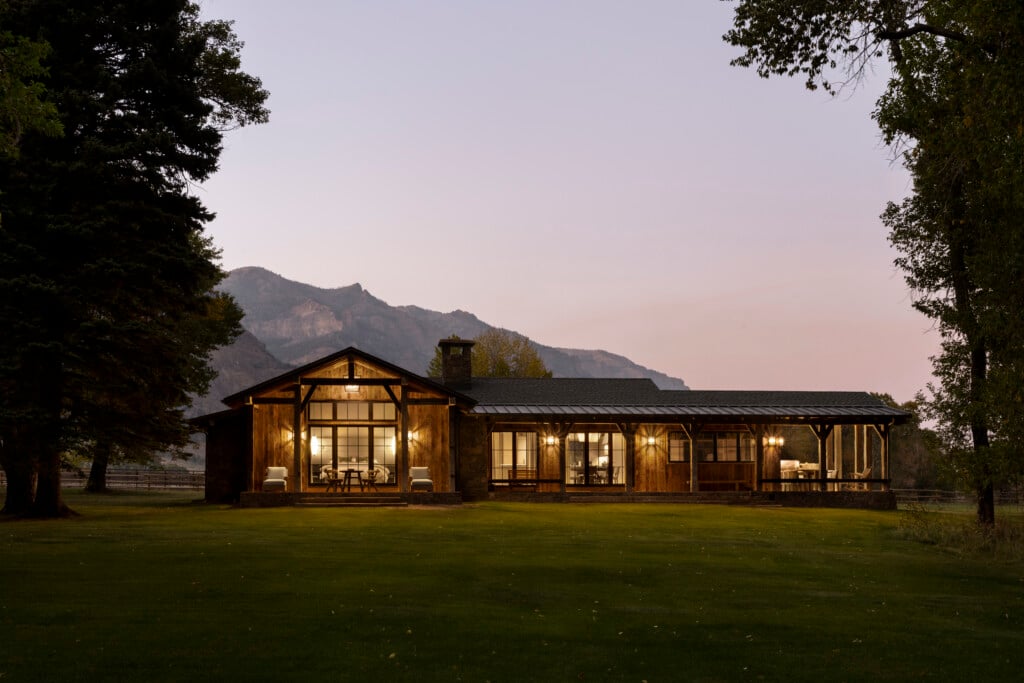
HATA Design Code: Old World European

Photo: Brent Bingham Photography
Inspired by the humble 19th-century shepherd’s cabin, a form known for its simplicity and subtle ingenuity, Hata’s design pays homage to a structure that once defined European countryside living. Traditionally composed of two 25-by-25-foot rooms, these cabins featured a “white room” for people and a “black room” for sheep, whose body heat helped warm the home through harsh winters.

Photo: Brent Bingham Photography
For Hata, we imported three shepherd’s cabins sourced from Poland (originally built in 1919, 1926 and 1946), which were meticulously dismantled, shipped in containers and reassembled on site in Edwards. To meet modern living standards while preserving their modest footprint and character, the three cabins were joined to create a single-level residence. Arranged in a triangular configuration, the composition maintains the integrity of each original structure while forming a cohesive whole. The result is a home that bridges centuries and continents—where old-world craftsmanship and agrarian logic are thoughtfully reinterpreted for contemporary mountain life.

Photo: Brent Bingham Photography
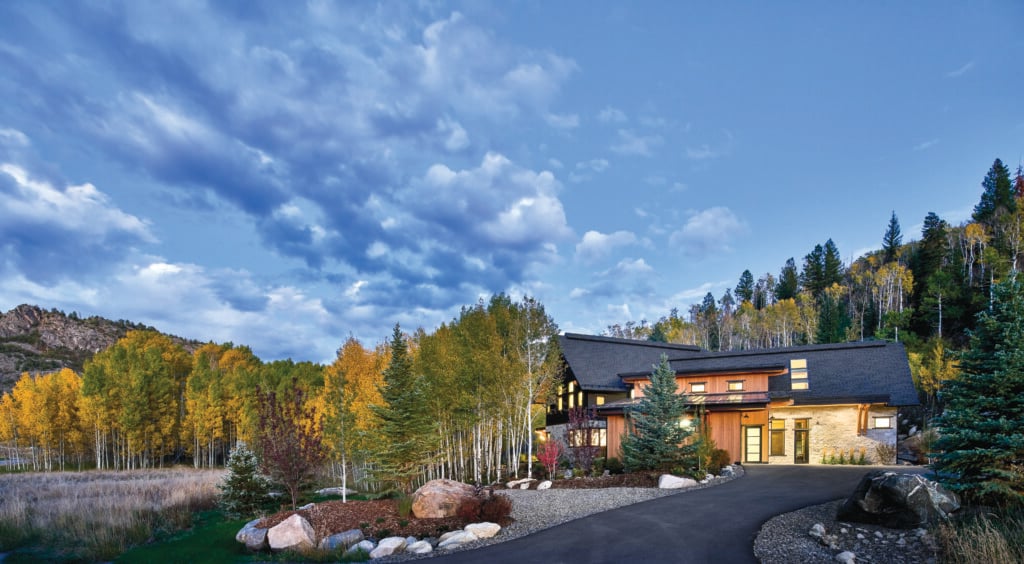
Three key architectural elements tie Hata to its European mountain roots: the roof, the central beam and the carved exterior outlookers. Designed for heavy snow, the roof accounts for roughly two-thirds of the structure, with walls making up just one-third, creating its distinctive mushroom-shaped silhouette. Inside, an exposed central timber beam forms the symbolic core of each cabin. Traditionally inscribed with significant dates—construction, births and deaths—it was considered the soul of the home. Carved outlookers, exterior beams that support the roof’s overhang, were often shaped like dogs’ or horse heads. Together, these details carry centuries of European tradition into Hata’s contemporary setting.
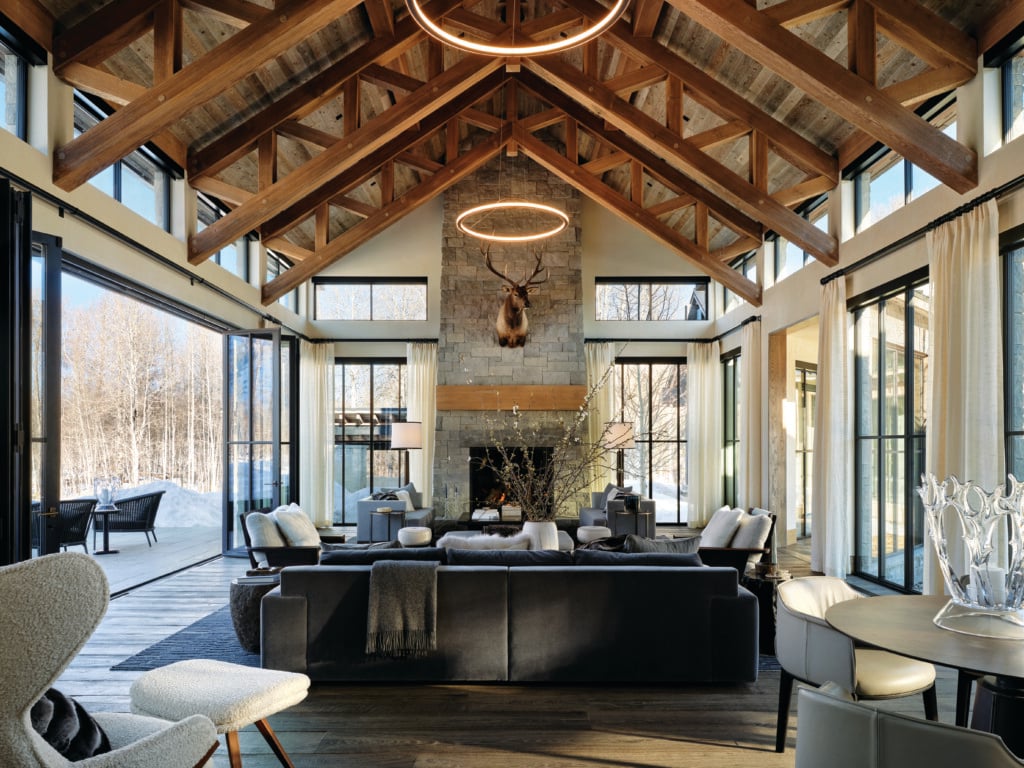
SHAMBALA Design Code: DaVinci’s Golden Ratio

Photo: Brent Bingham Photography
For this project, beauty wasn’t left to instinct alone. There is a science to it, an underlying order that gives a space meaning and harmony. That order is rooted in Leonardo da Vinci’s Golden Ratio, also known as the divine proportion: approximately 1 to 1.618. Found throughout geometry, art and classical architecture, it establishes ideal proportions that feel inherently balanced to the human eye.

Photo: Brent Bingham Photography
To create a structure that is aesthetically pleasing, functional and enduring, the design turns to these classical principles. The golden ratio helps determine everything from where windows are placed to how doors are spaced. Height is intentionally greater than width, ensuring the structure feels grounded yet elevated.

Photo: Brent Bingham Photography
Shambala’s 30-foot width required extending the ceiling height to achieve the proper proportion. The solution was a six-foot cupola (seen in the first image), subtly lifting the volume to meet the golden rule while adding architectural unique character.
Inside, the living, dining and cooking areas flow together in one expansive, barn-style space. Large sliding doors and generous glazing blur the boundary between indoors and out capturing light, landscape and proportion in equal measure.
SCHMITT SCHANGRILA Design Code: Art and the Artistry of Nature

Photo: Brent Bingham Photography
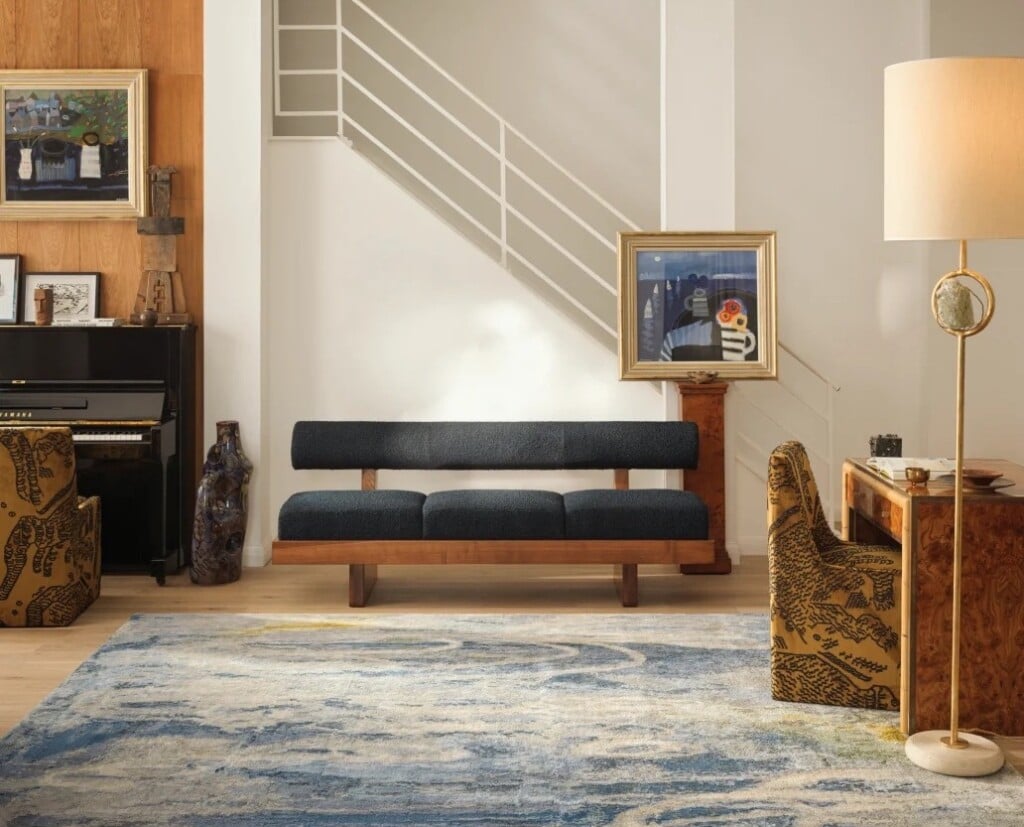
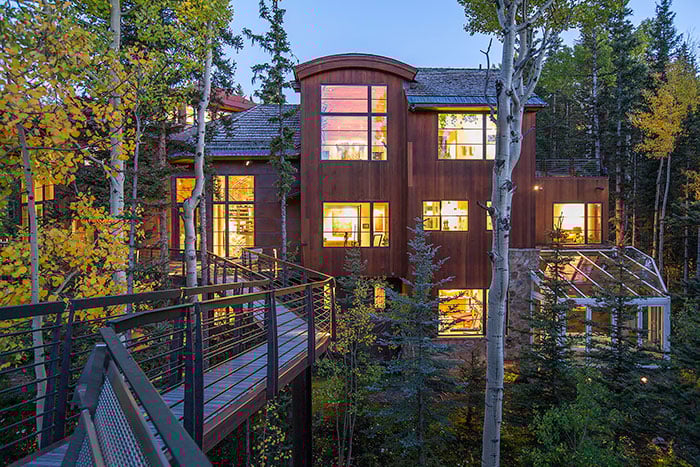
Schmitt Shangrila was conceived as a vessel—an architectural framework designed to showcase and elevate the homeowner’s art collection, from paintings to glass sculptures. The structure itself is intentionally restrained, allowing the artwork to take center stage. It’s a home where walls, light and proportion exist in service to creativity.

Photo: Brent Bingham Photography
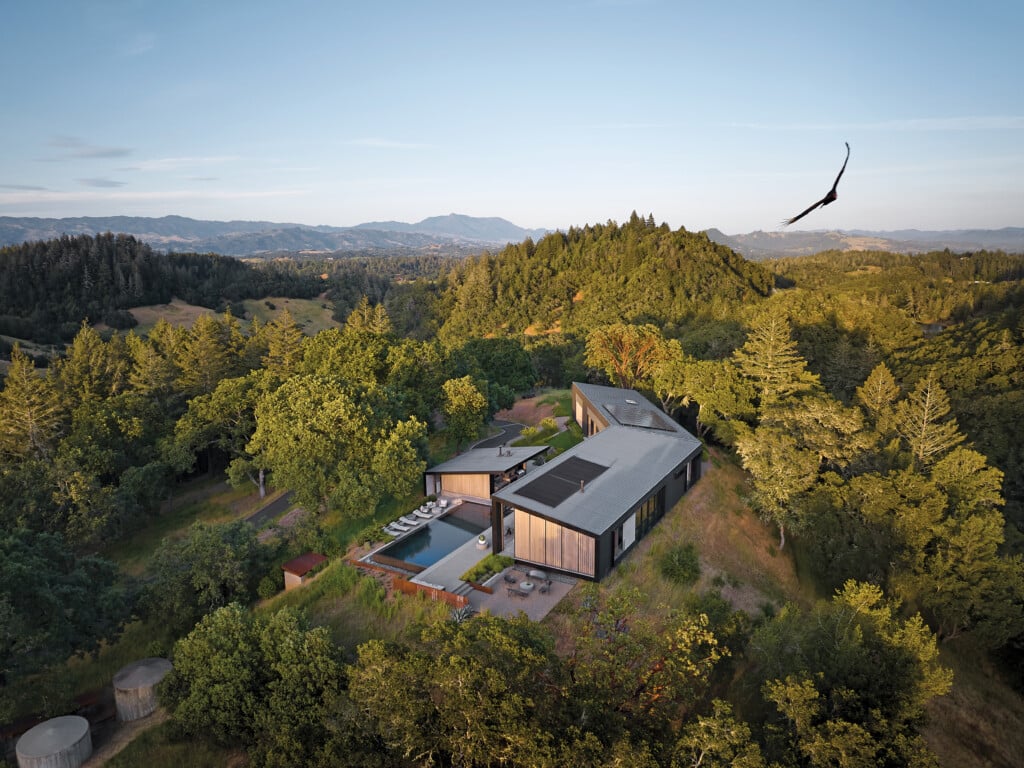
Three distinct volumes are connected by glass corridors: one for the living, kitchen and dining spaces; one for the primary suite; and one for the music room and guest quarters. These transparent connectors create separation without isolation, preserving intimacy while maintaining visual flow.

Photo: Brent Bingham Photography
The structure itself was fairly simple—until the art arrived. With each piece installed, the house came alive—color, texture and reflection animating the spaces as intended.
This home’s oversized windows and several outdoor living spaces allow for expansive views in all directions blending into the natural landscape. The name itself—a play on the owners’ surname and “Shangrila,” a remote idyllic hideaway—adds another layer of meaning. In naming the home, the owners gave it a soul, inviting a deeper reading of both the artwork within and the natural artistry beyond its walls.
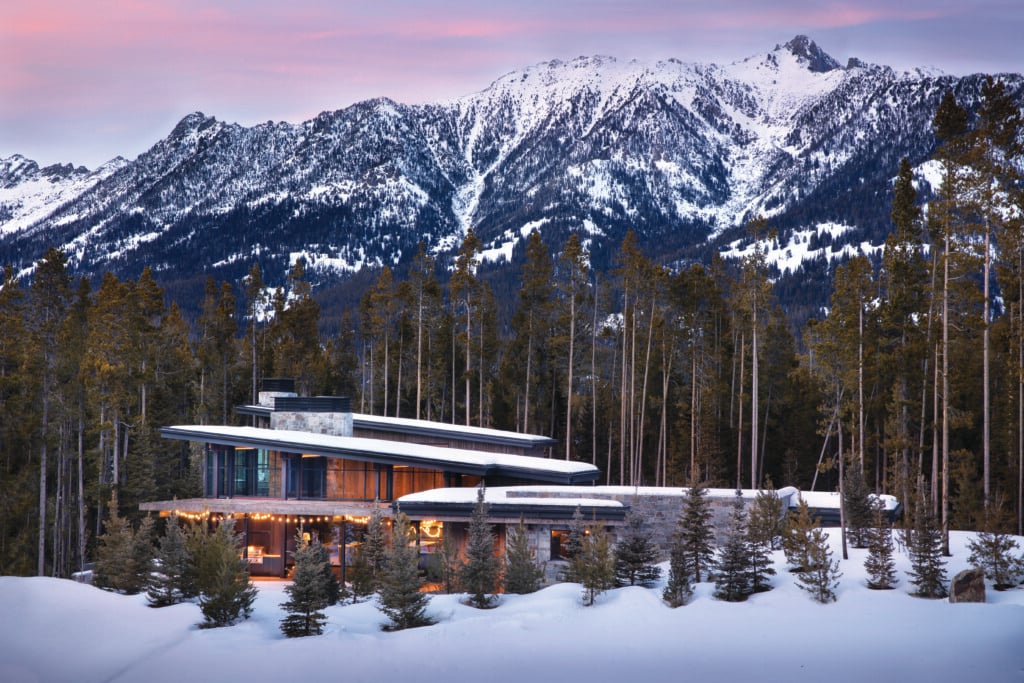
WINDY HILL Design Code: The Soul’s Longing for Simplicity
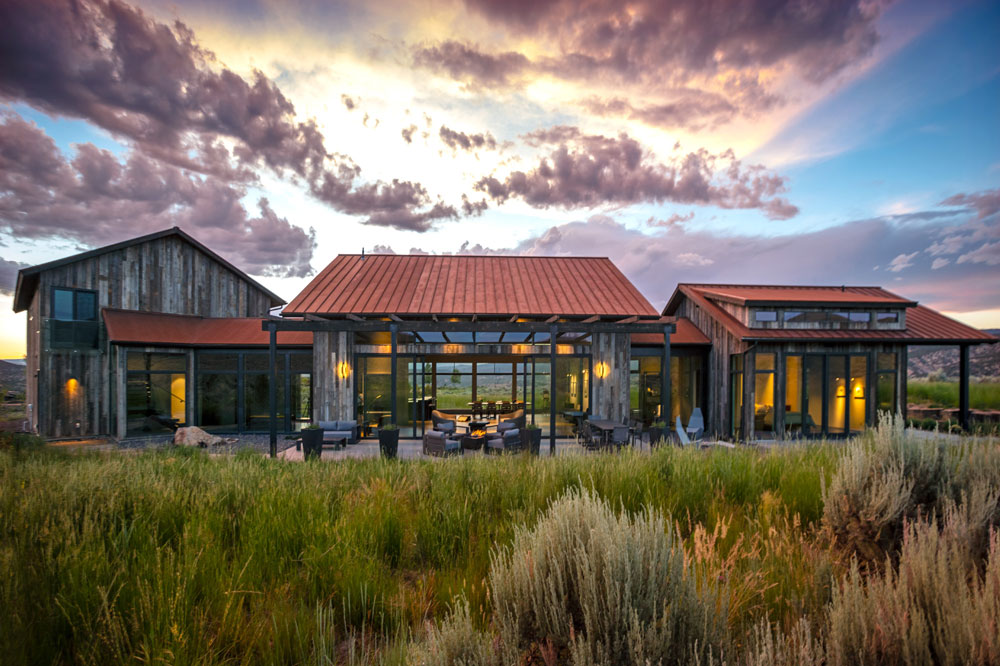
Photo: Brent Bingham Photography
Windy Hill is rooted in restraint. Its minimalist proportions reflect a homeowner with a refined architectural eye—someone who values clarity of form over excess. The result is a home shaped by simplicity, where every element feels intentional.
Photo: Brent Bingham Photography
Sculptural steel elements, cast-concrete garden chairs and a yellow swing chair perfectly framed in a floor-to-ceiling pane of glass introduce moments of quiet artistry. As classical music enthusiasts, the owners also prioritized exceptional acoustics, allowing sound to resonate beautifully throughout the home.

Photo: Brent Bingham Photography
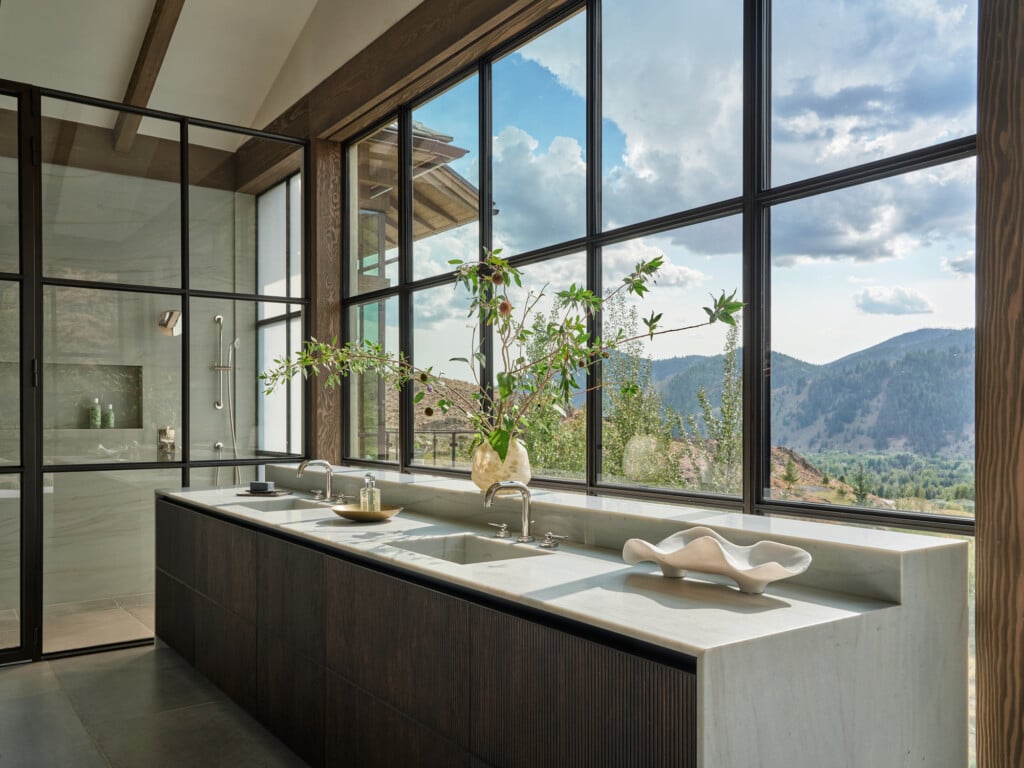
Wide expanses of glass track the sun’s daily path, marking time through light and shadow. Carefully placed windows capture sweeping 360-degree views, while floor-to-ceiling doors dissolve boundaries between indoors and out.
Though minimalist in expression, the design of Windy Hill thoughtfully highlights the clients’ art collection and the sculptural beauty of the furniture itself. The home is comfortable yet understated, seamlessly shifting focus from the objects within to the natural beauty surrounding it. Windy Hill becomes a deeply personal sanctuary, offering calm and clarity apart from the hustle and bustle of everyday life.
Architect/Builder/Designer Kasia Karska is the owner of the boutique design-build firm, Kasia Karska Design, located in Vail Valley, Colorado. The talented team at Kasia Karska strives to create unique environments for their clients, full of infinite potential, tranquility, and inspiration. View their profile or contact Kasia and her team at 970-343-2302.
Sponsored Content for this article is provided by Kasia Karska Design.