An Exclusive Look at Theresa Stirling’s Artistic Journey
Theresa Stirling’s monumental paintings made with wax and fire are natural, primal and fearless.
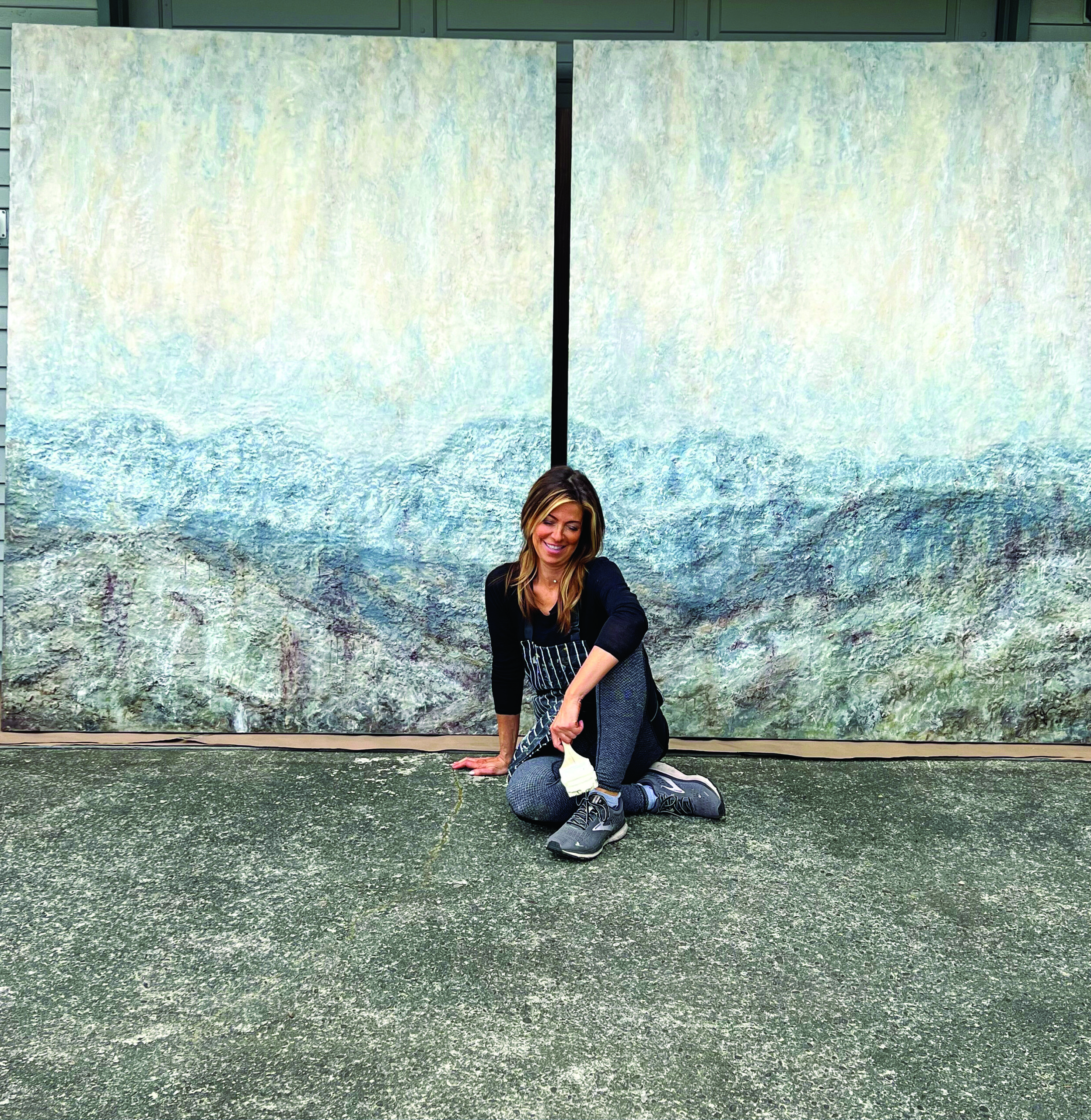
Artist Theresa Stirling in front of Gore Range panels created for a private residence. Each panel has more than 20 layers of applied wax and weighs about 50 pounds. | Photo: Theresa Stirling
From the time Theresa Stirling was a child, nature has been a big part of her life. “I was a total tomboy and outdoors all of the time … riding bikes, getting grubby and minutely exploring my surroundings,” she says. Even then, she was drawn to the textures and subtle colors she saw in nature. As an adult, she transitioned to an art career after more than 15 years in biotech marketing. “I was ready to switch gears to a more thoughtful life,” she says. “Making art gives me vitality and purpose.”
The natural world continues to play a central part in Stirling’s life and art. “I feel steeped in the nature that surrounds me,” she says, looking out her studio windows to a large meadow, a natural pond and the Olympic Mountains in the distance. Her canvases are all nature inspired—atmospheric mountains, dreamy seascapes, ethereal forests, impressionistic renderings of horses, wolves in the wild and bison in the snow. Her medium also comes from nature. “Wax from bees, sap from trees, and fire,” she notes, summarizing the encaustic technique (essentially, painting with hot beeswax) that is her signature style. It is one of the oldest forms of art, dating back to ancient Greece.
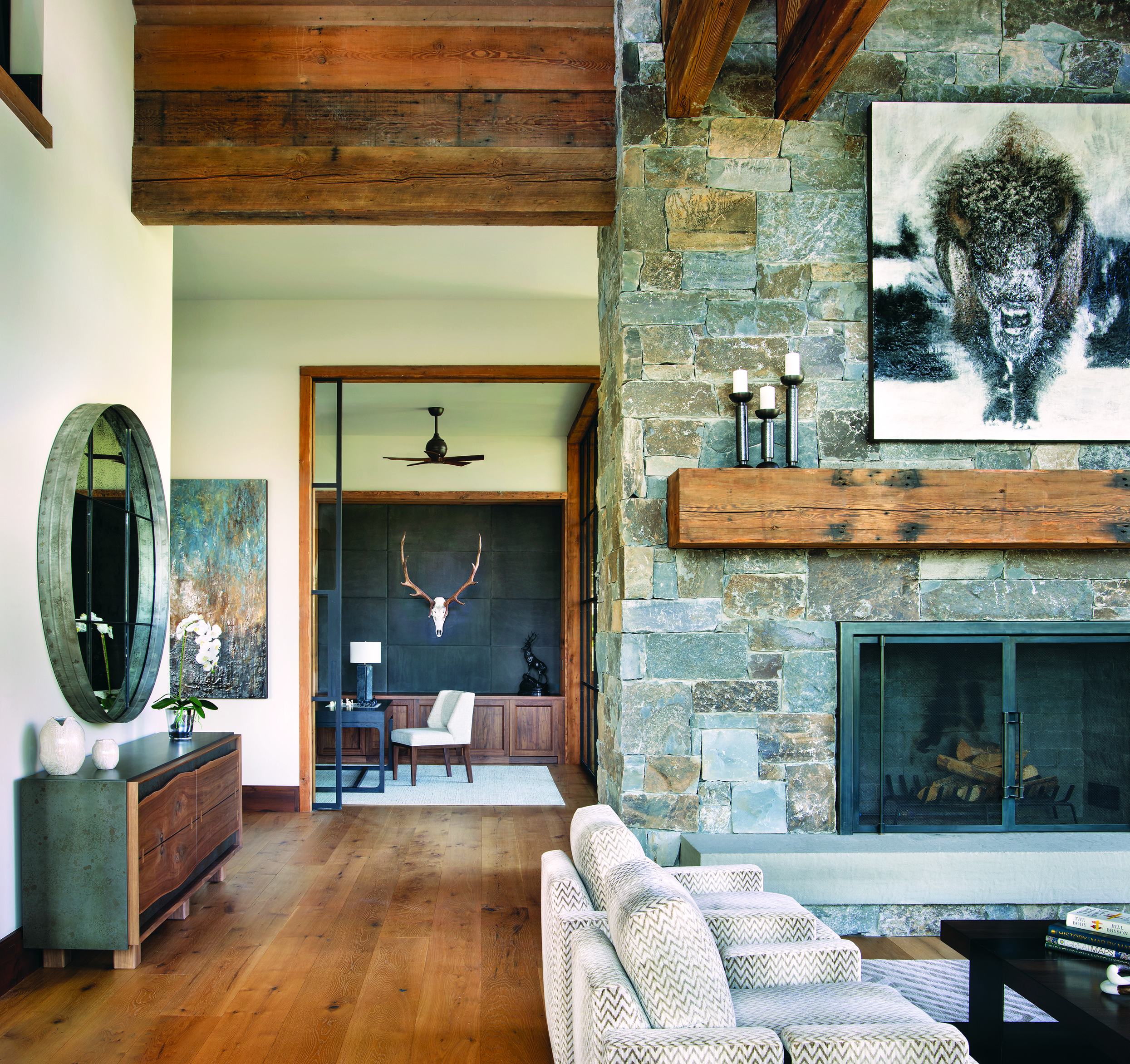
Stirling’s large encaustic-on-birch-panel image of an American bison (set in an abstract landscape) hangs above a soaring stone fireplace in the great room of a Mountain Modern residence. | Photo: Gibeon Photography
“Encaustic art means slowly applying hot wax to a wood panel, then layering, melting and layering again,” Stirling explains. The molten wax she uses is mixed with damar (a natural tree resin), dry pigments and oil paints for color. The hallmark of Stirling’s work is a sophisticated earth-tone palette of cream, ochre, rich black, leaf green and every shade of brown from caramel to ebony.
In her studio, a six-foot-by-six-foot image of a bison has been glued (with “old school paste”) onto a birchwood panel and now sits on an enormous table lined with brown butcher paper. Wax—in coffee cans, soup cans, tuna cans and repurposed saucepans—is melting on hot griddles. “Many dozens of cans are coming up to a temperature of 200 degrees Fahrenheit,” she says. The entire studio smells of melting beeswax—warm, musky and softly sweet.
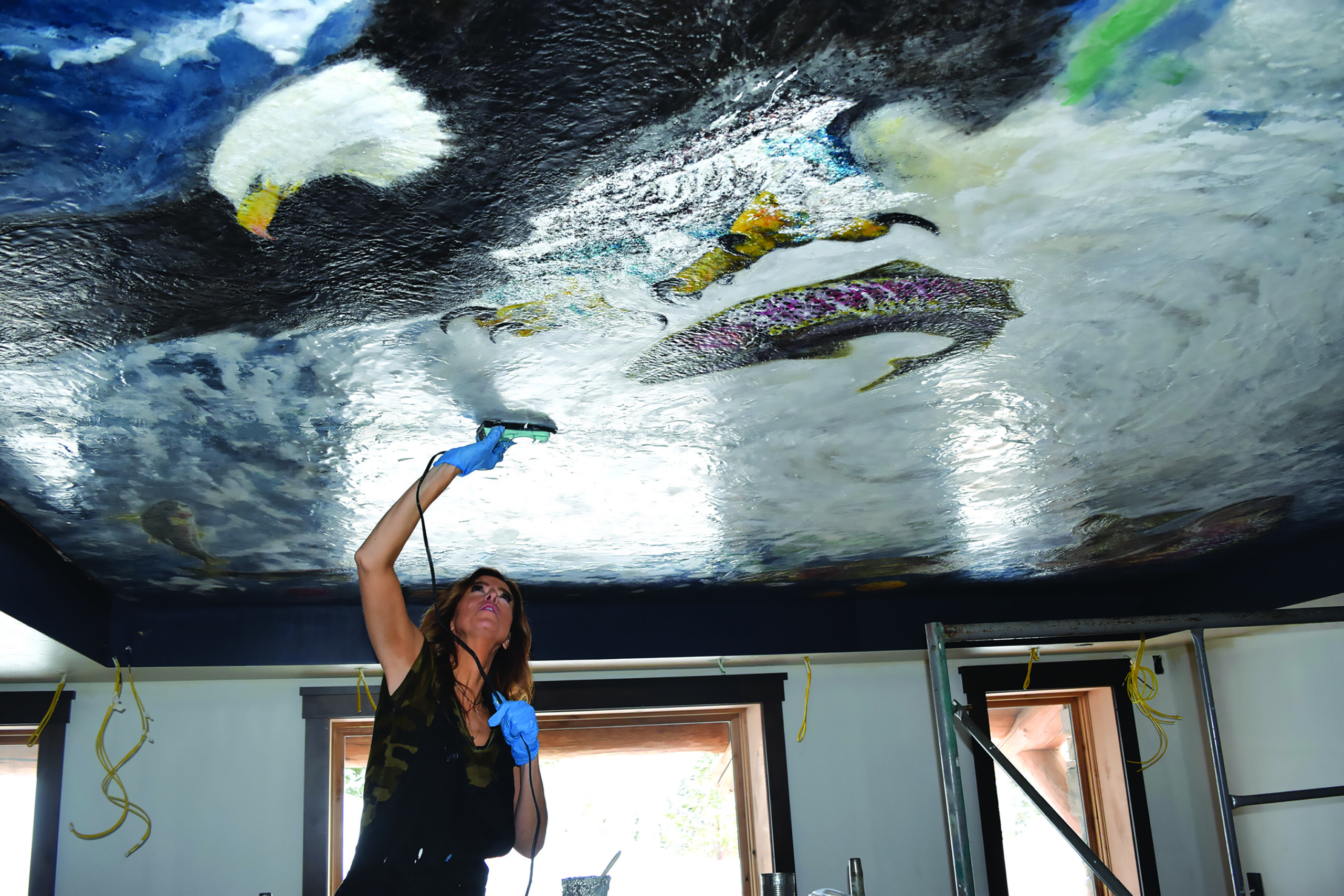
A ceiling mural (for the home theater of a Yellowstone Club residence) consists of four interlocking panels for a grand-scale (27,000 square inches) nature scene that took 12 months to complete. | Photo: Theresa Stirling
Stirling starts to work, dripping wax, scraping wax, and applying wax with a brush or spreading it with sticks. She lets it harden, then hits it with a flame from a butane torch. She builds her painting slowly, hand layering up to 20 layers of melted, pigmented beeswax. She smooths some of the layers and leaves others rough until she achieves something she calls “perfect imperfection.” It is a very physical process that takes strength, agility and confidence. “When I am painting with fire, there are some things I can’t control, and that makes me fearless,” she says.
Stirling’s monumental paintings decorate high-end homes from Aspen to Kona, from Sun Valley and Scottsdale to Florida. She works closely with clients who often share images of their favorite places, from which she creates highly customized, large-scale abstract paintings. She also collaborates with architects and builders to integrate her large-scale installations into their projects. “I’m bringing nature in, not just to hang on the wall but into the ‘bones’ of their biophilic designs,” she says about entire walls she has created for family compounds, wellness destinations and private clubs.
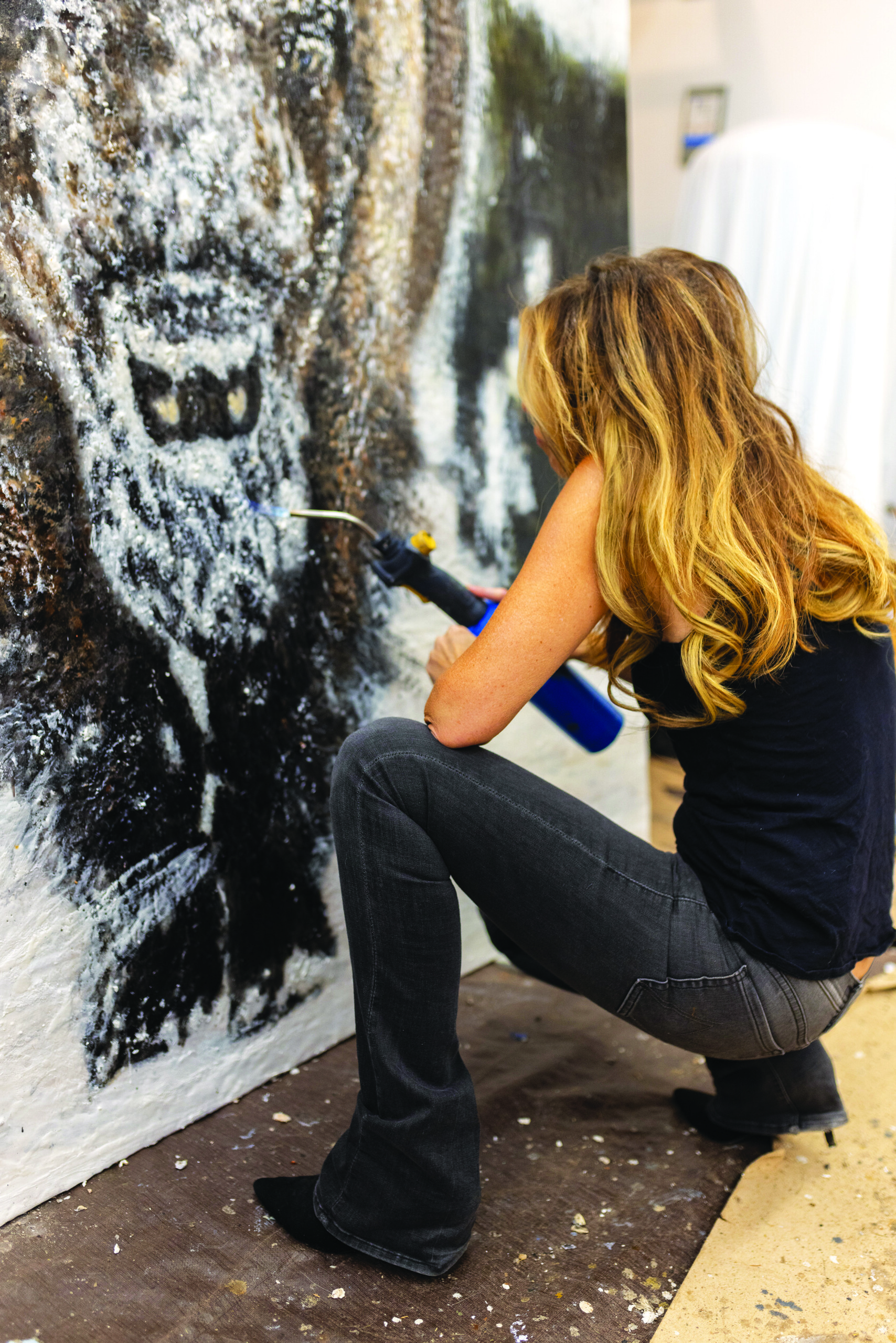
Stirling works on a 10-foot bison image. The encaustic technique involves layering, melting, and layering the wax again. | Photo: Theresa Stirling
Recently, Stirling has created an entire series of small-scale paintings (available on her website) to make her work accessible to fans of her work who do not have big walls to fill. “And I, too, have fallen in love with my ‘littles,’” she says. “Sometimes a smaller work is part of a larger vision.”
Another innovation: the Stirling Studios Membership Collective, through which she offers live streams of her works in progress and brand-building support for creatives looking to elevate their vision. One piece of advice she gives people just starting on their art journey: “If it excites you and scares you at the same time, that means you should do it … just do it.”
As seen in Mountain Living’s November/December 2025 issue.
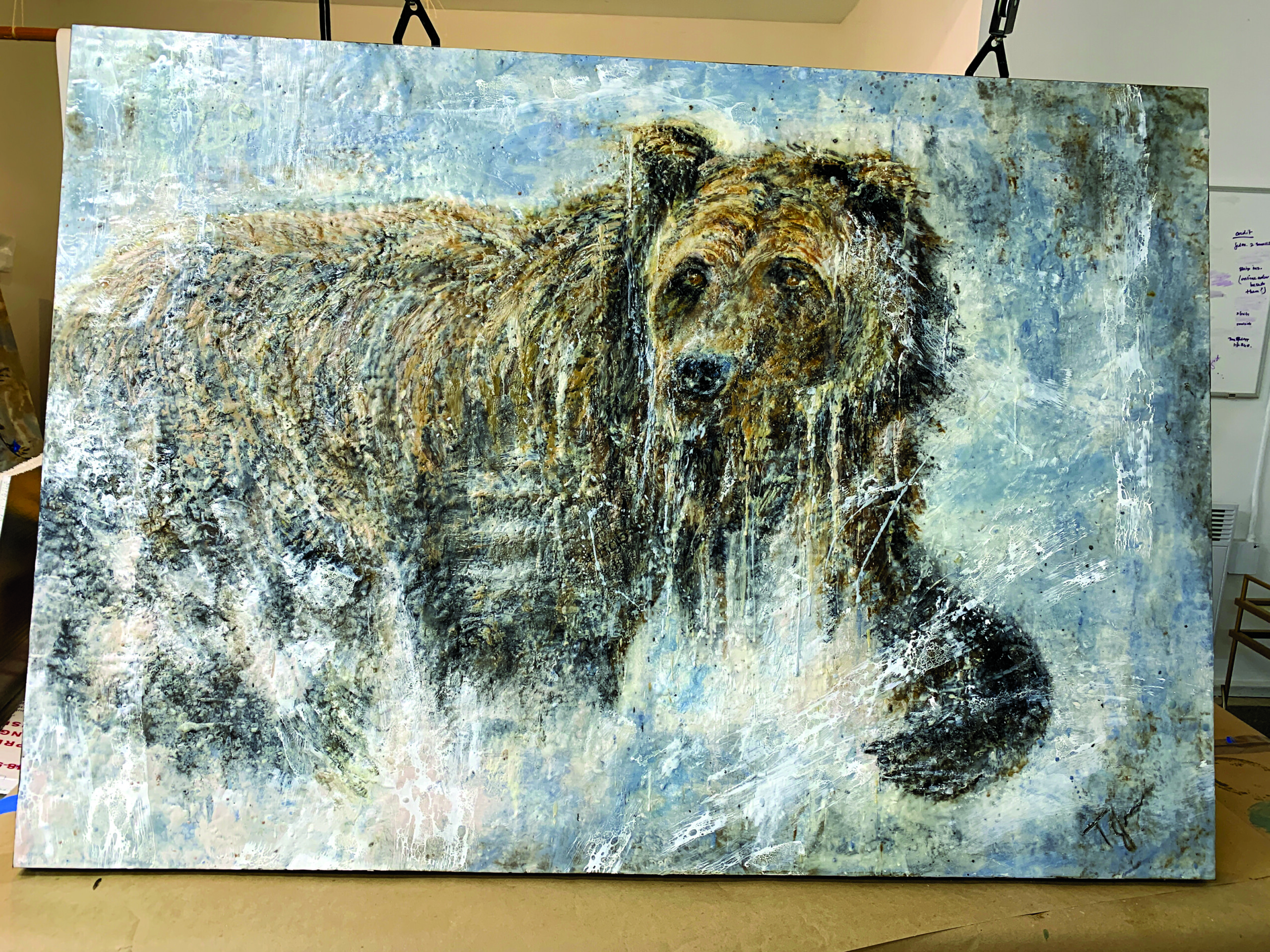
Stirling achieves the bear’s matted fur by smoothing some areas on a the piece, and leaving others rough, in a process she calls “perfect imperfection.” | Photo: Theresa Stirling
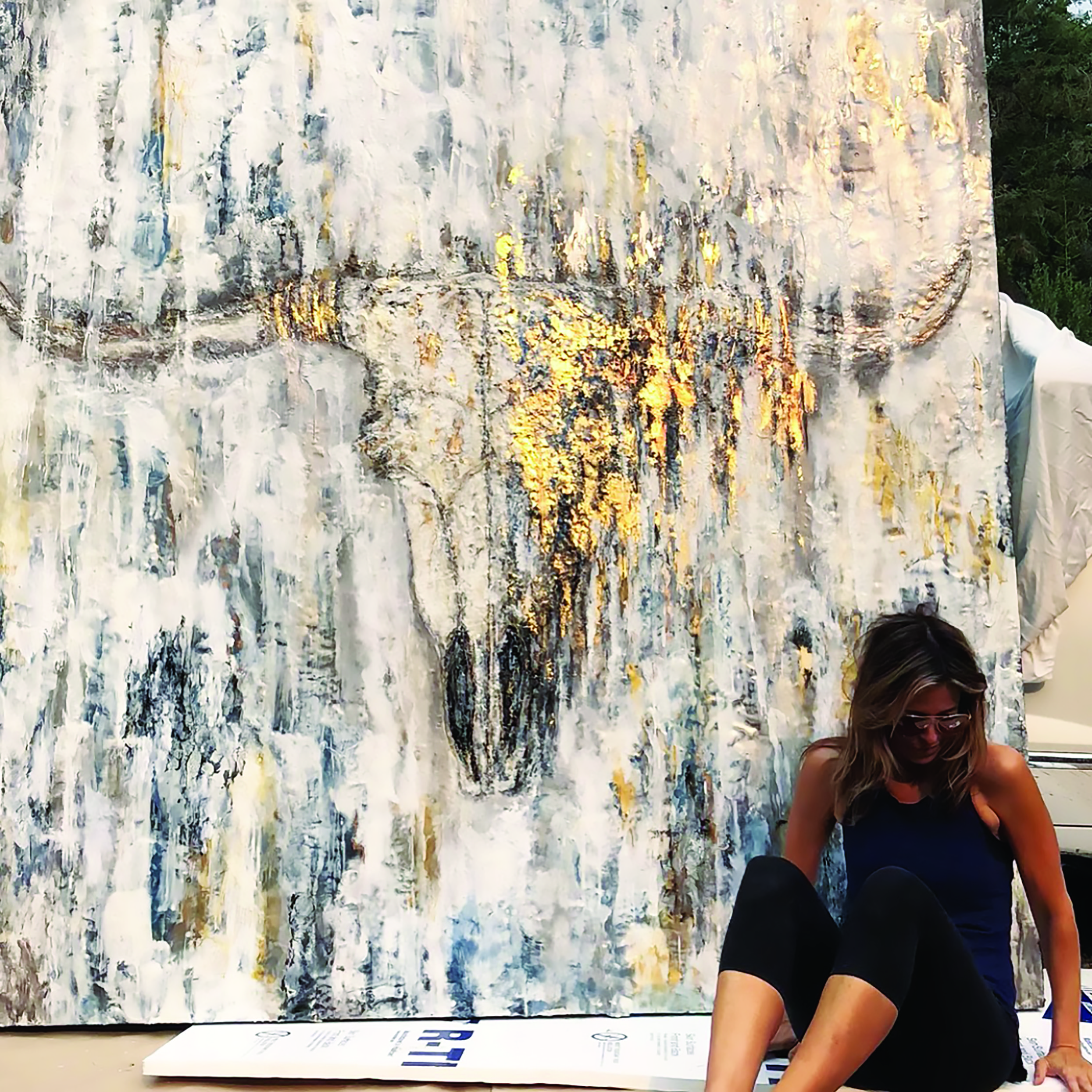
Stirling created “Longhorn Skull,”a textured encaustic art piece for a mountain home in Jackson Hole, Wyoming. This painting celebrates the majestic Texas longhorn, an icon of the American West. | Photo: Theresa Stirling